By Carissa Rutkauskas and Kathrine Grant
The 2020 New England Association of Concurrent Enrollment Partnerships (NEACEP) was to be held at the University of Rhode Island on May 29, with the theme of Barriers & Breakthroughs in Early College Programming; however the event was postponed due to COVID-19. Carissa Rutkauskas and Kathrine Grant’s presentation, CE in NE: History, Facts, and Stats to Communicate a Stronger, More Unified Future will have to wait until it is safe for people to once again travel, gather in groups, and appreciate the freedoms associated with a pre-pandemic lifestyle. While we will not be presenting at NEACEP this spring, we would like to share a glimpse of what we have been working on here.
The presentation is an overview of the challenges and barriers created by a lack of centralized, key programmatic features across the field and within specific programs—including marketing, data, and theory behind Concurrent Enrollment (CE)—and offers suggestions of for a centralized ideological strategy, organizing, professionalization, and strategic marketing as part of the solution.
Centralized ideological strategy. CE programs vary vastly by region, state, and even within states. A sample of differentiating variables include, but are not limited to: program name and terminology used, who teaches, where courses are taught, cost of program, matriculation status of the students, and programs hosted by two-year technical versus four-year institutions of higher education (IHE). The University of Connecticut’s original concurrent enrollment program, the High School Co-operative Program for Superior Students, was established in 1955 and laid the groundwork for its continuously operating program. In 1997, the National Association of Concurrent Enrollment Programs (NACEP) became the first, and to date, the only national accreditation body of its type. They, and organizations such as the College in High School Alliance, the Education Commission of the States, and independent researchers, have helped create a strong framework and standards for the idea of high school students taking college courses.
Essential to this agenda is an agreed upon, standard terminology. The U.S. Department of Education defines dual enrollment (DE) as students enroll in postsecondary coursework while also enrolled in high school.* NACEP defines CE as the subset of dual enrollment courses taught by college-approved high schools. Yet, not all programs or states employ the same language to describe the same process of accelerating secondary learning: a concurrent program in one state may be considered a dual enrollment in another. These seemingly straightforward definitions, unfortunately, have not established a precedent on name standardization at the state-level; the issue of naming and terminology is and are further exasperated with the use of dual credit and names and definitions unique to states and individual programs.
Equally essential is determining what CE is not. Standardized tests, such as the College Level Exam Placement (CLEP), Advanced Placement (AP), and International Baccalaureate (IB) can be categorized as Prior Learning Assessments (PLAs), where credit is earned outside the classroom, or based off a single assessment, usually in the form of an exam. These and other PLAs are often mistakenly categorized with CE credit, for political, economic, or reasons of unfamiliarity with the differences. Clearly defining and communicating what CE is, including the parameters of instruction, location, and testing, is paramount to its continued success.
Organizing. NACEP, NEACEP (and other state NACEP chapters) have done amazing work in creating a more centralized and unified approach, but states without a strong statewide CE policy or legislation are often left fragmented. In Connecticut, for example, the brief amount of the State legislation on CE is vague at best and does not assign a name to high school students enrolled in college courses (regardless of where they are taking their course—at their high school or on their a college campus). Even as the home of the first concurrent enrollment program in the country, our State guidance is not well-defined, diminishes the strength of CE programs.
Of the 36 degree-granting undergraduate IHEs in the State, nearly all offer some type of college credit program or opportunity for high school students – whether it be CE, DE, PLAs, or another model. Unfortunately there is currently no accurate database or combination of internet search terms that would produce a complete list of these courses. To find all of the programs in Connecticut, you would have to combine a series of search terms—and you still might miss a program or two. States such as Utah and Vermont have comprehensive statewide policies in place and assign a specific and clear name to their programs. The lack of common language between and among states not only further obscures the prospect of comprehensive research or the likelihood students being able to maximize earning college credit while in high school—it also provides utter confusion. For example, Utah uses the term concurrent enrollment and Vermont’s choice is dual enrollment in state policy for programs in which a secondary school student can take a postsecondary course at the high school or IHE with IHE oversight. At UConn ECE, we would define this as a concurrent enrollment program—even though our program is only for students who take postsecondary courses at their high school.
The National Center for Education Statistics (NCES) also does not completely accurately represent these type of programs. Although UConn ECE is the oldest and one of the largest programs in the country of its type, its CE impact is often overlooked. UConn ECE students are not matriculating college students, but rather non-degree students. This means they have the option of transferring their credits to a degree-seeking instruction (non-matriculated means that just because they are a part of UConn ECE and are taking UConn courses, they are not pursuing a degree at the University). UConn ECE is one of the nation’s largest programs, serving approximately 13,500 students annually, but these figures are often captured only at the institutional level and are missing from NCES databases or at the state level. Without organizing, and the consistency in language that comes with, the impact of programs like UConn ECE—from providing access to higher education to the many financial benefits for students—can be completely overlooked.
Professionalization. The sharing and dissemination of specialized knowledge and information in relation to CE programs through professional organizations not only safeguards and refines best practices but provides an opportunity for mutual enrichment and advancement. Organizations like NACEP and NEACEP do just this: from conferences to reaccreditation, they help to ensure quality in programs and continual improvement within the field. These organizations not only help maintain a sense of norms and offer a centralized ideological strategy through their research, advocacy, engagement, and community and comradery through networking and volunteering—they also often are involved in accreditation based on a shared set of standards.
Also key to communicating and challenging new studies, theories, and practices is a peer reviewed academic journal. The CE discipline is fortunate to have a small, but growing, number of organizations and researchers sharing this common purpose; but, the volume and support of research in CE is much less established from than other areas. Those involved with community colleges, for example, can be a member of the American Association of Community Colleges, as well as dozens of niche councils, alliances, and associations, with focus on topics such a specific demographic or geography. Institutional accreditation, at least in California, is conducted at the Accrediting Commission for Community and Junior Colleges (ACCJC), while institutions in the rest of the county fall under the auspices of regional accreditations who also serve 4-year institutions. Research is collected in publications that are independent and unbiased from the accreditor in peer-reviewed journals such as Community College Review and Community College Journal of Research and Practice.
To consider the impact of just one organization, take the discipline of English: English Language Arts educators across the pre-k-20 continuum can be a part of the National Council of Teachers of English (NCTE), which is an overarching organization that supports the advancement of the field. This organization hosts an annual convention with specific strands for members with diverse interests. It also houses several academic journals (such as English Journal and College Composition and Communication), advocates for the field at local and national levels, and supports these efforts with coordinated research. NCTE also supports state affiliates, which mirror the national organization, and offers assemblies and groups that allow for specification and continued learning within a certain domain. These many, but unified, aspects of NCTE work in conjunction with one another to provide a coordinated, rich, and diverse engagement and learning network that moves the discipline forward.
CE is making strides in the area of a scholarly periodical with the much anticipated Concurrent Enrollment Review, a partnership among Syracuse University’s Project Advance, Boise State University Concurrent Enrollment Program, and UConn ECE (for more information, see The Last Great Frontier). The goal of this journal is to provide a specific coordinating body to solicit, distribute, warehouse, and support continued research into concurrent enrollment; this effort helps to enhance the continual process of legitimizing and professionalizing the field. CE has a national organization and national conferences. There are regional organizations to support the specific needs of areas within the country. Programs and organizing bodies have made coordinated efforts to advocate for the field, both inside and outside of the political arena. But these efforts do not reflect the full capacity of the field to provide professional development and enrichment opportunities for programs, create and distribute research on the impacts of CE, or advocate for programs and the experiences they provide for students.
Strategic marketing. Organizations like the College Board’s Advanced Placement (AP) and International Baccalaureate’s Diploma Programme (IB) are common household terms, but how many of you were aware of AP tests before you or your student went to high school? And how many were aware of concurrent enrollment opportunities? We would wager that it is a lot less of you in the second group. AP and IB have centralized and strategized their marketing campaigns—across the years and different educational contexts—to move their programs forward. Students know about AP tests (and about SATs and ACTs) and how important they are for secondary and postsecondary opportunities—yet, the impact of concurrent enrollment (which we would argue is greater since it provides an experience more analogous to post-secondary study as compared to a singular test) is so significantly less known.
To return to the many programs in Connecticut that use many names to communicate CE (or DE…or dual credit), the majority of marketing is either done from an IHE program to a high school, or solely the burden of an overworked high school staff. UConn ECE has made efforts to extend this marketing to younger students (such as through our partnership with the Connecticut Parent/ Teachers Association [CT PTA]) to provide students with more, and earlier, information about their secondary academic options. However, these efforts are local to our program and are not aligned with other programs within the state or with regional or national bodies. Two programs through the State of Connecticut’s Community College system, College Career Pathways (CCP), a national program funded through the Carl B. Perkins Career and Technical Improvement Act of 2006, and High School Partnerships Programs (HSPP), are somewhat more organized in presenting these options to students and families. Fortunately, some states with more developed policy do mandate early marketing coordinating these efforts. Centralized marketing, especially on the national level, would provide programs with a structure to continually extend the opportunities they provide to students and help to ensure that more students are aware—and able—to take advantage of CE opportunities.
In closing, coordinating marketing, organizing, and creating and participating in professional organization and activities across state and national levels can help establish a centralized ideological strategy that would help to extend and deepen the mission of concurrent enrollment. A programmatic unity would benefit individuals programs, it makes the experiences provided by concurrent enrollment more accessible and richer for the students and schools we serve. Enhancing, deepening, and extending learning for students is not just CE’s laudable pursuit: it is imperative work to prepare students for a complex, multifaceted, and ever-changing future. Sharing this in a unified and coordinated manner only extends our work.
Author: Carissa Rutkauskas
Behind the Scenes at Pre-College Summer: A chat with our Graduate Assistants

Nicole Hyman and Nella Quasnitschka
 In 2014, a group of staff from the Center for Excellence in Teaching and Learning (CETL) came together to offer
high school students the opportunity to live and learn at UConn’s first Pre-College Summer (PCS) program.
That summer, there were about 50 high school students who participated, each one enrolled in one of the
seven courses offered by UConn faculty. Since then, PCS has grown to bring about 400 participants to campus
each summer and has expanded to run four one-week sessions with over 30 courses for students to choose
from.
With that growth came the need for more staff. In July of 2014, Erin Donohue, a master’s student in the
Human Development and Family Studies Department, was hired as residential staff, and became the first PCS
Graduate Assistant (GA) the following year. We are extremely blessed to still have Erin working for the
program today. Erin’s valuable contributions led us to explore a partnership with UConn’s Higher Education
and Student Affairs (HESA) program as a GA site for graduate students enrolled in the HESA program. Our first
HESA GA, Joe Fisher, joined us in July 2017, followed by Cody Olson in July 2018, and Nicole Hyman in July
2019.
We set high expectations for our GAs who are tasked with hiring, training, and supervising summer residential
staff, programming exploratory workshops, and developing policies. Our GAs work closely with University
faculty, staff, undergraduate and graduate students, as well as high school counselors, students, and parents.
We have seen them work through their graduate programs with determination and dedication and have found
it is so rewarding to see them succeed. In the past year, Joe graduated (May 2019), Erin successfully defended
her dissertation (April 2020), and Cody is graduating this May 2020.
PCS would not be the program it is today without our Graduate Assistants. As a way to celebrate and
recognize our recent graduates, we have given them the spotlight to share about their contributions and
experiences during their time with us by answering a few questions.
1. What is your most memorable moment as a PCS GA?
Erin Donohue: The most memorable moments for me as a PCS GA are the 4 weeks each year when students
attend the program. Although those weeks are usually stressful behind the scenes, seeing the positive impact
that the program has on students and their transformation from the first to last day of their stay in the
program is truly rewarding.
Joe Fisher: The office feel. During my time as a GA, we moved offices, though the close-knit family feel of our
team remained the same. Talking over cubicles, or stopping in often to sit down on someone's 'friend' chair,
my best memories come from small brainstorming sessions with the PCS team that led to such great ideas and
laughs.
Cody Olson: Presenting at the 2019 NAASS conference on the new hiring process I developed and receiving so
much support from my coworkers and praise from the audience is something I'll never forget. It proved to me
that I belong in this field and showed me how much my supervisors and friends care about me and my career.
2. What is one thing you will take away from your experience?
Erin Donohue: It's really hard to pick just one thing! I've learned so much from working with the PCS team
over the years. I think what I will take away from this experience is that teamwork and the sharing of ideas can
really make a vision a reality because each person brings their own unique perspectives and experiences to
the table; and everyone's ideas are important. I think this is a valuable take-away moving forward in any
career.
"Seeing the positive impact that the program has on students and their transformation from the first to last day of their stay in the program is truly rewarding."
— Erin Donohue
Joe Fisher: Certainly something that I have taken away, and that has assisted me so much in my professional
career, is the self-motivation and need for creativity that Nella and Melanie, my supervisors, instilled in me. As
a fast moving program, there was not always time to plan and coordinate a change, so there was always a
need for someone who needed to be a self-starter and motivated to get the job done.
Cody Olson: I am walking away from this assistantship feeling incredibly confident in my abilities as a higher
education practitioner. Nella once told me that her goal for the GAs in her office is for them to feel as though
they can run the program themselves by the time their two years are done. I feel like I could run not only PCS,
but really any program and this has me excited for the next chapter of my professional life.
3. What accomplishment with PCS are you most proud of?
Erin Donohue: I'm most proud of the growth of the program over the years and the effort it has taken to get
us where we are now. I've been with PCS since 2014 when we were only a 2-week program with about 50
students, so to be a part of the cumulative efforts to grow and expand the program to a 4-week program with
hundreds of students is something to be proud of.
“When I think about PCS, I usually think about my summer staff. Building a team that created long-lasting bonds and genuinely enjoyed their experience was incredible. I’d like to think that in some ways I changed the culture of our program and that this culture shift will benefit the program for years to come.”
— Cody Olson
Joe Fisher: I think I am most proud of being able to rethink and recreate our residential team positions,
including creating the newest role, the Residential Counselor for Student Welfare. The position is a unique
hybrid between a counselor and confidant. There was a direct need for students to have an outlet in our
residential program, and this position allowed for students to be heard, seen, and supported to be successful
in completing our residential program.
Cody Olson: When I think about PCS, I usually think about my summer staff. Building a team that created long-
lasting bonds and genuinely enjoyed their experience was incredible. I'd like to think that in some ways I
changed the culture of our program and that this culture shift will benefit the program for years to come.
Nicole has been another great addition to the PCS family with her expertise in access and working with First Generation College students. We are looking forward to another year with her on our team and all the
possibilities that brings. We are also excited to welcome our newest HESA GA, Deanna Gallegos, to the PCS
team this fall. Deanna is a 2019 graduate of the University of California-Davis and will be with us for the next
two years.
We don’t know where we’d be without our GAs. Erin, Joe, Cody, Nicole, and soon-to-be Deanna have all, and
will, shape PCS in unique ways that highlight their own interests and strengths. Thank you for all your hard
work and dedication to the program.
UConn ECE Recognizes Excellence and Awards Six Student Scholarships

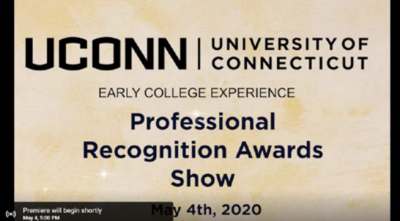
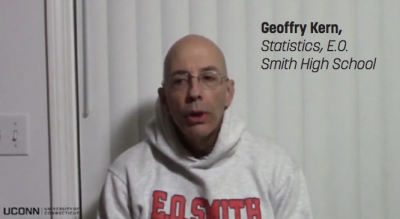
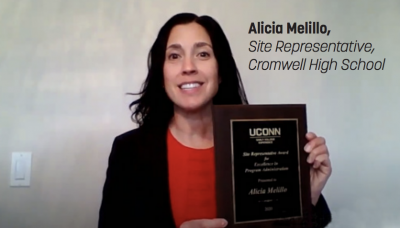
2020 UConn ECE Professional Recognition Awards Moves from Ceremony to Show
Overcoming Adversity: UConn ECE Strong


Erin Blanchette Transitions to Another Office
By Brian A. Boecherer
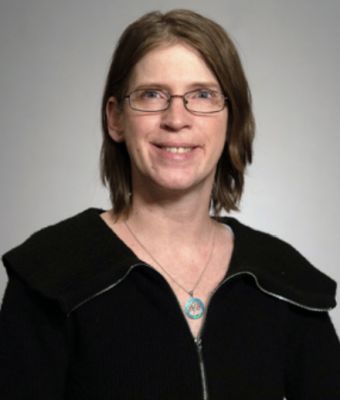
The office is experiencing another transition – Erin Blanchette – our long-time colleague has transitioned to another job at the University in the accounting division. We are sad to see Erin go, and her departure has left a noticeable hole in the office. We are, however, so happy for her, as this is clearly a good progression and a new exciting adventure for her. Erin joined the office in 2006 and has filled many positions over the years. Some may remember her as the registration coordinator and also assistant to the previous director. In more recent times Erin has led our financial area – modernizing student billing, collections, and developing a billing customer service presence for the office. Erin is also responsible for deepening our relationship with the Avery Point Campus and working with the leadership on that campus to host a UConn ECE Cardboard Boat Race in conjunction with Avery Point’s boat race. Erin created the UConn ECE store and has been a big part of our student outreach and UConn ECE marketing and branding. Not only has Erin accomplished much, she has created relationships that will last. Erin has been an important team builder in the office, instigating office lunches, holiday parties, birthday parties, and being one of the “special ingredients” that have made the office fun and familial. Erin leaves a lasting mark on the program and with whom she has worked. Thank you, Erin, for all that you have done to support the program and the people who make the program.
Registration 2020-2021
By Todd Blodgett
As colleges, universities, and K-12 education moved to distance learning due to school closures, UConn proved to be no different. With the conclusion of the 2019-2020 academic year, UConn Early College Experience (ECE) moves into the new registration year. Our program has made some adjustments to our application in order to better accommodate students who are applying while physically away from their high schools.
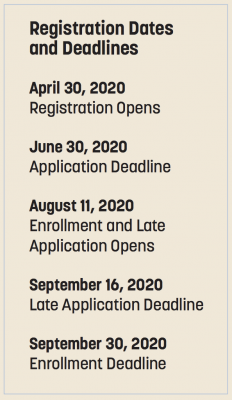
1. Students do not need to obtain a Site Representative or school counselor signature on their consent form. High schools will confirm student enrollment in the Fall.
2. There will be no additional $25 administrative fee for students who cannot apply before June 30th and need to apply in the Fall.
While the Spring 2020 semester was not what our students expected, we are excited to get everyone back in classrooms and engaging in our UConn ECE courses soon. Please continue to monitor your e-mail, our website (ece.uconn. edu), and our social media platforms for registration news. Students should continue to engage with their school counselors about taking UConn courses through Early College Experience.
Have a great Summer and we look forward to collaborating with you this Fall as we begin a new academic year!
Celebrating Languages with UConn ECE
Our Chat with Nalini Ravishanker