Anthropology Class Visit


By Jessica Dunn


On November 14th, Jeremy Pilver from Farmington High School along with 16 enthusiastic UConn ECE ANTH1500: Great Discoveries in Archeology students, visited the UConn Storrs Campus for an unforgettable day of hands-on discovery.


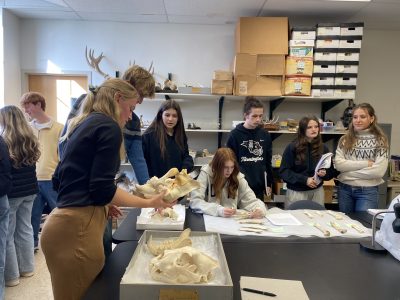
The group explored archaeology and ancient lifeways through three dynamic workshops. Under the guidance of Dr. Daniel Adler, students experimented with stone tool technology, learning how early humans shaped tools for survival. They then delved into ancient plant use and food practices with UConn ECE Anthropology Faculty Coordinator Alexia Smith, uncovering how agriculture transformed societies. Finally, with Sophia De Schiffart, they examined ancient animal use, gaining insight into the critical role animals played in past cultures.


From shaping stone tools to exploring ancient diets and animal lifeways, the experience gave students a rare chance to step into the shoes of archaeologists and uncover the secrets of the past. Guided by UConn experts, they didn’t just learn, they experienced archaeology in action!

108 Courses, 48 Disciplines, 1 Expanded Legacy


By Christopher Todd


Partnering with school districts, to meet the needs of educators and students across the state, continues to be a founding tenant of all programming within the Office of Early College Programs. The UConn Early College Experience (ECE) program continues to broaden access to rigorous, college coursework, strengthening pathways into meaningful careers and expanding opportunities in key academic and professional fields.


New offerings such as ARE 1110E: Population, Food, and the Environment introduces students to real-world economic and environmental challenges related to food systems and resource use, supporting career interests in sustainability, agribusiness, and public policy. In the sciences, CHEM 1124Q & CHEM 1125Q: Fundamentals of General Chemistry I & II provide foundational chemistry knowledge essential for advanced study in health sciences, engineering, and research-based careers. These courses support students preparing for majors in chemistry, pharmacy, biology, and related STEM areas by delivering college-level laboratory and quantitative experience while still in high school.


The arts, engineering, and professional skill development are further enriched through courses like DRAM 1101: Introduction to Theatre and DRAM 3141: Playwriting and Workshop, which nurture creativity, communication, and critical thinking—skills valuable across creative industries and collaborative work environments. On the engineering front, ENGR 1195: Special Topics in Engineering: AI Literacy (AI for All) immerses students in contemporary technological literacy, preparing them for careers at the intersection of computing, design, and innovation, while ME 2140: Computer-Aided Design and Manufacturing offers hands-on experience with SolidWorks/CAD and design tools relevant to manufacturing and product development. In the health professions, PHAR 1002: Fundamentals of Pharmacology and PHRX 3057: Discovering the Leader Within build foundational scientific understanding and professional leadership skills, supporting future pathways in pharmacy, medicine, and allied health.


Complementing these discipline-specific offerings, UNIV 1820: First Year Seminar – Intro to Making engages students in creative problem solving foundational to maker and design thinking, supporting a successful transition to college-level learning while encouraging innovation across academic and career interests. Together, these courses reflect UConn ECE’s continued commitment to broadening access, expanding opportunity, and preparing students for future success in high-demand fields.


As a result, the program continues to expand access to high-quality, college coursework that strengthens career pathways and supports student exploration across multiple career pathways including but not limited to education, health sciences, engineering, and STEM fields.

U.S. History Class Visit


By Rachel Riendeau,
UConn U.S. History ECE Instructor


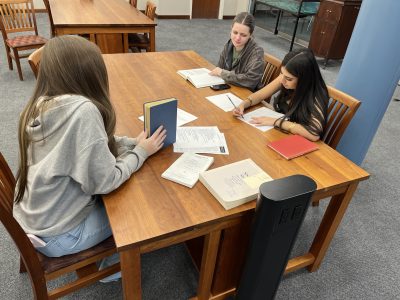
On November 20th, sixteen UConn ECE U.S. History students from Windham Technical High School visited the UConn Storrs campus to carry out historical research at the Dodd Archives and Babbidge Library. They were also able to attend a campus tour and meet with a current UConn student/ alumna from their school to discuss the transition to college.

Voice: The Student Ambassador Program


By Todd Blodgett


The UConn ECE Student Ambassador Program plays a crucial role within the UConn Early College Experience Program, where ambassadors actively assist with ECE marketing and administration, support fellow students, and collaborate with Site Representatives at their high schools. In recent years, we’ve expanded their responsibilities to make them more
interactive and present on the front lines of our social media and publications, allowing them to share experiences and projects within their UConn ECE courses.


Some of the initiatives that ambassadors have contributed to recently—and will continue to participate in this year—include the ECE Student Advice Column, where ambassadors share tips and insights for success in the program. They also participate in Ambassador Spotlights, allowing each ambassador to highlight their personal achievements and goals, and showcase their experiences with ECE. As UConn ECE continues to expand its Academic Planning Portal, we will take the advice and insights from our Student Ambassadors to help build our resources.


Ambassadors are also involved in semester reports, providing updates on what’s happening in their classrooms and ECE courses. During the fall term, they assist teachers with student registration, supporting a smooth enrollment process. We encourage and help support our Student Ambassadors to take a leadership role within their UConn ECE courses and amongst their peers.


The ECE Ambassador Program is an excellent leadership opportunity, and it’s rewarding to see the impact on our students’ futures. This program not only cultivates leadership skills but also serves as an inspiring pathway for other students who share similar values and aspirations to get involved in their schools and the UConn ECE Program.

CT Science OLYMPIAD

By Janet Belvel CT State Director, CT Science Olympiad UConn ECE Instructor at South Windsor High School


State Finals 2025


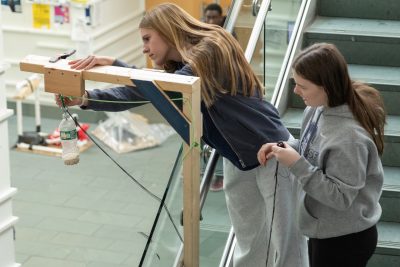
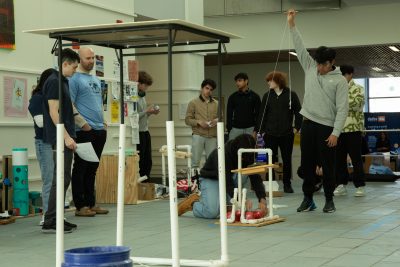
The University of Connecticut’s Storrs campus hosted over 40 high school teams from across the state for the 2025 Connecticut Science Olympiad State Finals. Sponsored by UConn’s Early College Experience program, the competition showcased the creativity, problem-solving skills, and scientific expertise of Connecticut’s brightest young minds.


This year’s event featured a dynamic mix of challenges, from hands-on engineering events like Helicopters and Electric Vehicles to rigorous knowledge-based tests in Anatomy and Chemistry. Each competition pushed students to think critically, collaborate effectively, and apply their scientific knowledge under pressure.


After a day of intense competition, South Windsor High School emerged as the state champion, earning the opportunity to represent Connecticut at the National Science Olympiad Tournament at the University of Nebraska in Lincoln. Hopkins School claimed second place, while Wilton High School secured third, followed closely by Avon High School in fourth. Their achievements reflect months of hard work, dedication and a deep passion for STEM subjects by students and their dedicated coaches.


While trophies and rankings highlight the competition, the heart of Science Olympiad lies in the experiences it creates. Students took on scientific challenges, worked with their partners, and struggled through complex problems as a team. Whether they were fine-tuning an engineering design, solving chemistry puzzles, or testing flight mechanics, every participant walked away with new skills and unforgettable memories.


This year’s tournament was a testament to the strength of Connecticut’s science education community. Thanks to the dedication of coaches, the generosity of sponsors, and the continued support of UConn’s ECE program, Science Olympiad remains a transformative experience for students across the state. We look forward to seeing what next year’s teams will do in the competition!

ECE Wallace Stevens Poetry Contest

By Sean Frederick Forbes, Ph.D. Director, Creative Writing Program UConn English Department


I’ve been writing narrative poetry and creative nonfiction for over twenty years, and when I am teaching undergraduate introductory level creative writing courses, my students often ask me a variation of two questions: “what inspires you to write?” and “what topics do you write about?” I respond by telling them that the familial and personal narratives my maternal grandmother told me as a child spurred a deep curiosity within me about how to tell a story, even if it may seem mundane to me. While I do prefer to write about my family’s ancestral lore acting in conversation with my grandmother’s stories, sometimes “big ideas come from out of the blue,” as is the theme of this year’s ECE magazine, in which I have found myself writing a poem about visiting the Dachau Concentration Camp Memorial Site in Bavaria, Germany in December 2015, or writing an ekphrastic poem (from the Greek, is a poem that describes a work of visual art, such as a painting, sculpture, or other form of visual art), about a painting titled “Misty Morning” by the Connecticut-based artist D. Stone. Memories, images, facts, emotions, questions, longings, yearnings, etc. are what people experience on a daily basis, a major and vital part of the human condition, and expressing oneself in the written word has the ability to be transformative and meaningful to the listener/reader, as well as the writer.


This year the ECE Wallace Stevens Poetry Contest received forty-five poetry packets. My fellow judges, Kyle Barron and Anh Le—both are PhD candidates in the English department at UConn and are creative writers—and I selected five poetry packets by Hannah Guo, Sapphira Costa, Yimin Wu, Hermione Ildefonso, and Naima Garcia as the first, second, third, and two Honorable Mention winners, respectively. On a Thursday morning in mid-March, Kyle, Anh, and I held a Zoom meeting to discuss and select the winners, and after an hour of deliberating, the three of us were impressed by the subjects and topics expressed in all of the submissions. There were five poets whose writing mesmerized us greatly for the levels of craft, creativity, imagery, depth of language, and range of topics and poetic forms and styles.


In the first two lines of the poem “Listening” by Hannah Guo, the reader is advised to “Stop in your tracks—let the autumn wind / gently caress your face and lift your chin skyward,” a gesture that allows one to experience a season and all that it offers. The speaker employs the use of the directive by addressing the reader as “you,” and while this tone may seem demanding, if not commanding to some readers, often times one needs to be reminded about the benefits of embracing an autumnal atmosphere of “distant bonfires, fallen leaves, rain-soaked bark— / a hint of cold earth, and the ghost of sunburnt grass.”


The speaker in Sapphira Costa’s poem “Bisavó,” the Portuguese word for grandmother, employs the literary technique of the braided narrative to highlight how three generations of women in her family approach personal silences. The speaker’s great-grandmother was regulated to domestic duties and took on hidden silences about her pains and worries, “her hands learned to hide her heart / to place away her strengths and burdens,” and the speaker’s grandmother took on the same domestic roles and responsibilities and inherited even deeper silences about her concerns and sorrows, “the quiet steadiness of hands that knew work.” The speaker is a young poet, writing about these silences in open forum, and at the end of the poem ponders if hiding these silences is a kin to drowning, in an emotional and psychological sense, as “if the flood isn’t the water rising, / but the weight of everything that is left unsaid.”


In Yimin Wu’s poem “Anticipating Ardor,” the speaker employs tercets, stanzas of three lines, to create a typographical juggling act of imagery and sound enacted on the page. The scene depicts a speaker sitting on a cold park bench deeply engaged with the architectural landscape of the park juxtaposed with the wild, creature-laden lushness of the forest nearby, and the mysterious wonders of the universe that surrounds, with each stanza offers a range of sonic and visual stimuli: “cicadas still chirping, my eyes snap open. / The trail of a shooting star glimmers above, / Almost akin to a strand of blond hair.”


Hermione Ildefonso’s poem “Gemini Syndrome” recounts the moment a speaker confronts, and transforms into, the dual persona of the Gemini zodiac sign via their reflection in a foggy mirror. The speaker asks, “what is a twin soul in a singular body?,” which is signaled by an inner desire and longing to comprehend their mercurial nature and patterns of behavior. The speaker understands that they’re changing as the world changes, and there is deep complexity, but also splendid wonder in who they are: “So, here I am, at the edge of knowing / with trembling hands, I scatter petals of possibility.”


The speaker in Naima Garcia’s poem “The Dead End at Daybreak” offers the reader a narrative about the Second Battle of Ypres that was fought between April 22 and May 25, 1915 during the First World War. This battle was a means to gain control of land to the east and the south of the Flemish town of Ypres in western Belgium. The use of the historical perspective and the speaker’s tone of voice provides the reader with a closer lens into this moment of war, in which the speaker states that “…Ypres / would never be the same glistening, tourist attraction it had been / before;” a startling image of the future juxtaposed with the “fruity scent of the lavenders.”


Hannah Guo
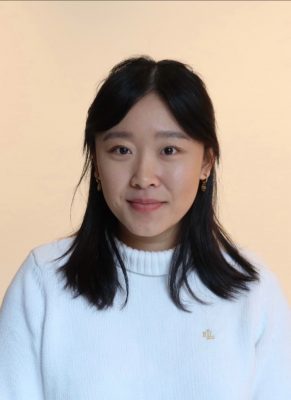
Hannah Guo is a senior in high school from Woodbridge, CT. She plans to attend Rice University in the fall and is passionate about the interactions of writing, community, and civic engagement. Watching words move, inspire, and unite people fills me with purpose. Since the very beginning, we have all been feelers. We have been storytellers. Leaning into that gives me strength.


Listening
Stop in your tracks—let the autumn wind
gently caress your face and lift your chin skyward
It wraps around your feet and whispers,
I can take it from here,
so you listen, and let it.


The wind smells like distant bonfires, fallen leaves, rain-soaked bark—
a hint of cold earth, and the ghost of sunburnt grass—
You smell like the wind.


Tell me, have you called the wrong people home?
Have you left your heart on regret’s shelf ?
Have you cradled your fear
when you should have been grasping at joy?
Have you forgiven yourself?


Speeding up, you feel your heart thumping,
Two feet trying to leave the ground,
The wind is trying, trying! trying!
Hair unfurling, winding into yours the way yarn binds itself to a spool
Only to stop at a foundation of solid wood,
chest rising, breathing precious life in—
The egrets keep soaring, their wings fanned out, spelling goodbye


Breathing hard you ask
the grand Oak
if he loves all his old selves
He says not necessarily—but they have made me so
I hold them every day and tell them they have done
a good job


And the Willow and Birch trees chime in, rustling,
You can also live a hundred lives
You can keep each one
And you realize they are right; you have—
And you will.


Sapphira Costa
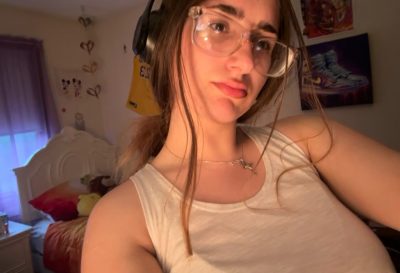
Sapphira Costa, a senior at Manchester High School, has been writing stories for as long as she can remember, finding a second home between dusty library shelves and thrifted notebooks filled with poems about longing, girlhood and becoming. She dreams of studying neuroscience to better understand the mind, but it is through poetry that she has always understood the soul. Her work has been recognized with two Gold Keys, two Silver Keys and an honorable mention from the 2022 and 2024 Scholastic Arts & Writing contest.
 

Bisavó
Born from the shadow of terracotta roofs,
where my great-grandmother once danced beneath the orange
blossoms,
growing among the vineyards and olive groves.
Her bare feet kissed the earth, dusting it with centuries of soil.
Her hands heavy with the weight of the harvest,
the patterns of the season etched into her skin.
She learned early to bear the weight of others as her own.


In Portugal, a women’s role was carved into the land,
she was the earth.
Her roots ran deep into the soil,
unshaken by the weight of family, traditions and expectations of
silence.
Her hands prepared meals, washed clothes, and raised children.
They sewed respect into every seam, served faith onto ever
plate,
all while a man who claimed her loyalty,
lingered in the arms of others.
Her hands learned to hide her heart,
to place away her strength and burdens.


The Church whispered to her,
reminded her that god watched the patient,
as if her silence was the way to sainthood.
Her faith instructed her that to speak of pain was a sin.
That her worth lied in her sacrifice,
in her ability to carry the burdens without complaint.


My great-grandmother inherited these beliefs like heirlooms,
tucked into the folds of a life lived passed down between kitchen
walls
and church pews, stitched between the pages of prayer books.
She never spoke of sorrow,
because sorrow was the quiet hum
of wind through azulejo courtyards,
where the walls held everything she couldn’t say.


She hemmed her sorrow into the edges of tablecloth and
dresses too long,
whispered them into the bread and malassada she baked,
but she never let them surface.
Emotions were a luxury,
an indulgence she could not afford.
They belonged to fado songs that carried her pain,
its melancholy seeping into the edges of every conversation
she never had.


In America, there is no room for this kind of quiet.
Here, feelings must be displayed like the fruits
at a Saturday market, ripe and open to touch.
But my grandmother,
she inherited her silence,
like the faded yellow on the Barcelos Rooster of her grand-
mother’s apron,
the quiet steadiness of hands that knew work
and “sim senhor”
but not words.


In the kitchen, caldo verde simmers,
the steam rising like the breath of something long held back
and I feel the weight of generations in every spoonful.
There is no fado here, only the chatter of this new land
that asks for too much and understands too little.
How can I explain the way my grandmother loves
in a language with no space for silence?


My great-grandmother never questioned her role.
Her days were spent in service
to family, to faith,
to the land that gave little but asked for much.
And my grandmother too, learned to swallow her voice,
to wear her silence as armour.
to carry the weight of expectation,
with silence, with grace.


But I live in a country that demands my voice,
where I am expected to be open,
to name my hurts, to name my struggles,
but my mouth is filled with saudade—
the longing for what is lost
before I ever knew it.


My great-grandmother taught my grandmother that silence
was safety,
and that to say too much
was to invite the world in too closely,
to let the sea flood the village.
But in this American land,
I wonder if silence is its own kind of drowning,
if the flood isn’t the water rising,
but the weight of everything that is left unsaid


Yimin Wu


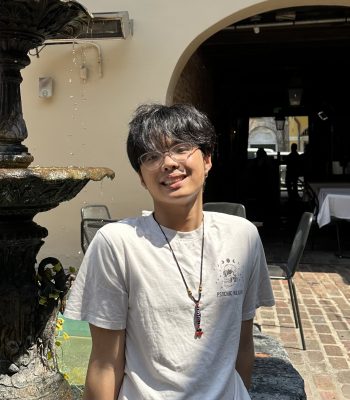
Yimin Wu is a senior attending Hall High School in West Hartford, where she’s the president of her school’s Creative Writing Club. Beyond the pen, she also loves learning foreign languages and likes to game in her free time. I’ve loved writing since elementary school, and for me, it’s a valuable way to express my authenticity and Asian-American experience. I enjoy going to local open-mic nights and share poetry together with friends.
 

Anticipating Ardor


Streetlights flickering, fireflies flashing,
I solemnly sit on the cold park bench,
Awaiting the right person to arrive.


From the corner of my eyes, a gleaming
Ray dashes through the frosty wind,
Flinging my body into a daze.


As we exchange a brief glance,
A blunt hammer clashes against
The anvil inside my iron lungs.


Stripping away my frigid facade,
That beaming smile melts off my steel
Skin and captures my heart of gold.


His teal eyes sparkle under the moon,
Irradiating my dilated, dark pupils.
I reach towards his curly, golden locks,


But the streak of light escapes my grasp,
Minimizing and disappearing into the stars,
Casting a silver shadow on my palm.


The shadow, emitting a tingling warmth,
Lingers in my hand, refusing to dissipate.
Clutching it to my chest, I plunge into slumber.


Cicadas still chirping, my eyes snap open.
The trail of a shooting star glimmers above,
Almost akin to a strand of blond hair.


Upon a yellow birch, a tiger owl blinks at me
In mockery. As I depart deep into the woods,
A creeping phantom of regret stalks me.


Sun emerging from the blurry horizon,
Sparrows ruffle their russet wings.
Past the bench, runs a familiar figure.


Making a double-take, he decides
To stop and sit down this time, eagerly
Awaiting the right person to arrive.


Hermione Ildefonso


Hermione Ildefonso is 17 years old and in her junior year at New Britain High School. She would describe herself as a lover of all things art and writing, and her poetry is a testament to that connection.

 

Poetry allows me to explore complex emotions and ideas in a creative and meaningful way. It’s how I translate the world around me onto the page.


Gemini Syndrome


In the mirror’s dim reflection,
two faces peep through the fog,
like shadows of thoughts
caught in a tornado of yearnings,
who am I when the world isn’t watching?
A whirlwind manakin,
twisting to the rhythm of others’ expectations,
each pulse, every heartbeat adds a tiny fragment
to this mosaic of selves.
On Monday, I am the rainmaker,
dancing barefoot in puddles of spontaneity,
lighting up the skies with laughter,
but by Tuesday,
the clouds gather,
and I dissolve into the calm before the storm,
a solitary figure,
huddling in the corners of my own mind.
What is a twin soul in a singular body?
One half conspirator, the other—
a reluctant participant in the play of life,
holding backstage secrets while the spotlight aches
for that dazzling performance.
But here I stand, the original and a ghost,
A dichotomy bound and unbound,
the dance of duality.
Words swirl, a cyclone of confusion;
“Be authentic,” they say,
Yet every revelation feels like a mask unmasked,
and the deeper I dig,
the deeper the chasm grows,
identity slipping like sand
between my fingers,
the essence of self caught in a paradox.
In a crowded room,
my voice shatters into tiny echoes,
each thread of laughter,
each sigh feels borrowed,
as I weave an intricate tapestry of personas—
the philosopher, the joker, the lover,
the strategist who charts the unseen pathways,
and still I linger,
a traveler in my own existence.
I ponder,
is it evolution or confusion?


Am I the artist painting my own reality
or a canvas upon which
the world scrawls its impressions?
In this Gemini syndrome,
I yearn to scream,
to break free from the expectations,
to dive into the abyss
and learn to swim
in the depths of who I might become.
So here I am, at the edge of knowing,
with trembling hands, I scatter petals of possibility,
letting go of what I thought I should be,
embracing the dance of fluctuations,
not seeking resolution,
but celebrating the beauty
of being beautifully,
confoundingly me.


Naima Garcia


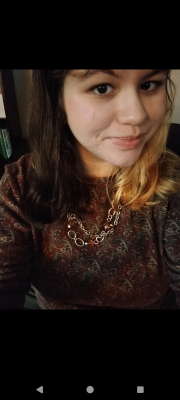
Naima Garcia is 18 years old and from Naugatuck, Connecticut. I connect to poetry due to my admiration for its potentially eloquent, song-like structure that provides a space for personal introspection and vivid imagery.
The Dead End at Daybreak


I remember it crystal clear, we all do. It was destined that we would never forget, the everlasting trauma would make our skin crawl, they made sure of that.


The swiftness of the flying poison, the gory casualties that followed, my bloody terror, our anxiety-induced hearts nearly slipping out of our chests, the burden of death and gas misting the atmosphere.


I’ll never forget the visions of the piles of rotting, lifeless corpses increasing by every second, the velvet-splattered outdoor ground, the thousands of Canadians who’s souls had been ripped out at the hands of chlorine gas, the eruption of stinging slipping through my lungs. I tear up and vomit at any topic relative in the slightest to such a memory
Rights and Responsibilities in History

Connecticut History Day Scholars Descend on Storrs


The University of Connecticut and the Office of Early College Programs is proud to support Connecticut History Day (CHD), an enriching program that empowers students to explore the past through in-depth research and critical thinking. This year’s theme, “Rights & Responsibilities in History”, resonates deeply with UConn’s mission to cultivate an informed, engaged citizenry committed to upholding democratic values. By encouraging students to investigate the historical struggles for rights and the responsibilities that accompany them, UConn and Connecticut History Day together help nurture the next generation of civic-minded leaders ready to contribute meaningfully to their communities and beyond.


On Saturday, March 29th, UConn Storrs hosted 25 schools comprised of 29 educators and 468 students for the Mansfield Regional Connecticut History Day Contest. In total, 4,106 students participated in Connecticut History Day contests this year, with the State Contest held at Central Connecticut State University (CCSU) on Saturday, May 3rd.


Cyndee McManaman, the Mansfield Regional Coordinator, wrote: “While we have quite the growing library of resources on the CHD website, the workshops are a powerful tool to support our educators and students. It’s so exciting for me to travel to different classrooms and work with our History Day participants! Seeing history through the eyes of our students, and understanding their passion for what they’ve learned, is inspiring!”


Several Mansfield Region students received awards or recognition at the National History Day Contest held at the University of
Maryland-College Park June 9-13, 2025.


MEDALS
Seniors Amanda Zadnik and Simonne Thibeault (E.O. Smith High School) finished third in Senior Group Exhibit, “Rewarded by Death: How Operation Columba Exemplifies the Rights and Responsibilities of Civilians in Wartime”


SPECIAL PRIZES
Julianne Pashe and Katie Smith (Ellington Middle School) received the World War II History Prize for their Junior Group Exhibit “Civilian Public Service Camps: The Compromise between Personal Rights and National Responsibility”


Vivaan Pandey and Vyom Kadegaonkar (Timothy Edwards Middle School) received the George Washington Leadership in History Award for their Junior Group Documentary, “Shays’ Rebellion: The Uprising that Shaped a Nation”


AWARDS
Bhaavni Kirshna (South Windsor High School) was awarded the Outstanding CT Award (Senior Division), finishing 7th place overall with her Senior Individual Performance “Noor Inayat Khan: A Responsibility to Resist”


FINALISTS
Lillian Magnoli (Timothy Edwards Middle School) 4th place Junior Paper, “Don’t Call Her a Business Woman; Call Her a Woman in Business; Beatrice Fox Auerbach’s Pioneering View of Rights and Responsibilities in History”


Emma Hennessey, Emma O’Brien and Lily Flynn (Timothy Edwards Middle School) 10th place Junior Group Performance, “The Abolitionist Who Never Stopped Writing: The Liberator’s Fight for Anti-Slavery”


Aarna Jaggi (Timothy Edwards Middle School) 10th place Junior Individual Website, “A Line in the Sand, A River of Blood: The Partition that Stole Millions of Rights”


Salma Hassan and Sohyla Hassan (Madina Academy) 9th Place Junior Group Website, “Luminous Lives, Remarkable Legacy: The Radium Girls’ Fight for Workplace Rights and Employer Responsibilities”


Salma Mahmoud, Sidra Bedir, Tasneem Zoghol and Zainah Khaliq (Madina Academy) 9th place Senior Group Performance “Nellie Bly, Asylum Spy: Exposing the Abuse of Patient Rights and Neglect of Medical Responsibilities”


Faqiha Faheem, Noora Mahmoud and Sarah Elsherbini (Madina Academy) 9th place Senior Group Website “The Triangle Shirtwaist Factory Fire: From Tragedy to Reform”


HONORABLE MENTION (Top 20)
Kalyani Tihaiya and Mia Chen (E. O. Smith High School) Senior Group Performance “From California’s Campuses to Communities: Asian Student Activists’ Fight for Inclusivity”


Jacob Brown (Rockville High School) Senior Individual
Exhibit “Sheff v. O’Neill: Equal Education in Connecticut”


Noor Hassan (Madina Academy) Senior Individual Website “Rights Denied, Responsibilities Betrayed: The Veiled Injustice of the Untreated Syphilis Study”


It is important to remember that the National History Day is not just a day, but an experience. Once students met with judges, they enjoyed a myriad of activities ranging from button trading to an Ice Cream Social and a day spent in Washington D.C. where the group met Senators Blumenthal and Murphy and toured the Capitol. Avner Wilson-Spiro from Wilton High School was one of only ten students invited to participate in the prestigious writers workshop at the White House. Jacob Brown from Rockville High School represented CT with his exhibit on Sheff v. O’Neill at the National Museum of American History as part of a daylong display of 47 History Day projects.

UConn Italian Multimedia Competition

By Jessica Dunn

May 2025


The 2025 UConn Early College Experience Italian Multimedia Competition brought Italian language learning to life through creativity, culture, and connection. Now in its second year, the contest—led by UConn ECE Italian Faculty Coordinator, Dr. Tina Chiappetta Miller—invited students to explore the theme “Il linguaggio…della natura” (The Language of… Nature) through original multimedia projects combining images, words, and sound.


More than just a language showcase, the competition encouraged students to think artistically and globally. Nearly 30 diverse and imaginative entries were submitted, ranging from poetic video essays to narrated animations and soundscapes inspired by the natural world.


For the second consecutive year, the judging panel was composed of 9th-grade students from Florence’s Istituto Agrario (Agricultural Institute). With thoughtfulness and care, they evaluated the submissions and selected the winners. Their final selections were shared in a special video presentation by jury representatives Lapo, Ettore, and Lorenzo, adding a personal and international dimension to the event.


The competition reflects the mission of UConn Italian and UConn ECE—to make language learning meaningful, immersive, and creative. By blending digital tools with cultural expression, students not only practiced Italian but brought it to life in new and powerful ways.


As this year’s entries show, Italian is more than a subject—it’s a living, expressive language. Through “Il linguaggio…della natura,” students gave voice to both language and nature, reminding us of the beauty that emerges when the two meet. Congratulations to all participants and winners!  Italian Multimedia Competition

Stakeholder Appreciation 2025

By Carissa Rutkauskas


As part of our annual stakeholder appreciation efforts, the UConn Early College Experience program proudly recognized the invaluable contributions of school counselors, teachers, and principals who support and champion UConn ECE at their high schools. In celebration of National School Counseling Week (February), Teacher Appreciation Week (May), and Principal Appreciation Week (May), we honored those who go above and beyond to ensure student success within the program. For the first time, we launched School Counselor Appreciation Week to spotlight both our Site Representatives and the broader counseling staff who guide students through course selection and enrollment in UConn ECE. During Teacher Appreciation Week—now in its second year—we celebrated instructors who bring UConn courses to life in high school classrooms with passion and dedication. Principal Appreciation Week, also newly introduced this year, acknowledged school leaders who create a supportive environment that allows the program to thrive. This year, we received an overwhelming 300+ nominations for instructors, 132 for school counselors, and 16 for principals—each submission filled with gratitude and admiration for these outstanding educators and leaders. Selected recipients—defined by receiving two or more nominations in the counselor and teacher categories— were awarded UConn ECE merchandise of their choice, a printed poster featuring heartfelt quotes from nominators, and recognition on our social media platforms. These recognitions underscore the collaborative spirit and dedication of educators and administrators who help shape meaningful academic opportunities for students through UConn ECE. Below are some of the more powerful quotes from nominators:


Principal Appreciation

Mr. Kuckel, Cromwell High School


• Principal Kuckel’s consistent message to students, families, and staff is that dual enrollment courses help students prepare for college and their future careers. He has increased our ECE student enrollment and course offerings during his administration by adding five new courses.


• Principal Kuckel is always promoting awareness about the value and accessibility of these courses in a variety of ways. He thinks about all of our students and understands the value for every student tohave college exposure in addition to earning credits. His availability, flexibility and unconditional support is appreciated by our instructors, our students, and myself! – Alicia Melillo, UConn ECE Site Representative, Cromwell High School


School Counselor Appreciation

• Danielle Jurkiewicz, Fairfield Warde High School

Mrs. J, my school counselor, played a pivotal role in my success by helping me stay focused on my path toward my early childhood education major at UConn. She worked with me to plan my senior schedule, supported my decision to take the ECE course, and reassured me when I doubted myself— and now I’m excelling in the class, grateful for her encouragement to follow my passion. – Saylor, UConn ECE Student


• Janine Murdy, Woodland Regional High School
Mrs. Murdy is a UConn alum who continually promotes ECE programs to our students. She starts promoting these programs when we register students in 8th grade and continues to challenge students to enroll in challenging courses throughout their high school years. – Principal Mulligan, Woodland Regional High School


• Kate Kopylec, UConn ECE Site Representative; Lyman Hall High School
Throughout the UConn ECE experience, Mrs. Kopylec has provided clear information on what ECE classes are, deadlines and requirements for registering (also visiting all ECE classes to assist in the registration process), and scholarship information. Her support has made my (and others) ECE experience less stressful/overwhelming. – Anonymous UConn ECE Student


Instructor Appreciation

• Monika Fryc-Gabrys, Woodland Regional High School, MATH 1131Q: Calculus I
Monika inspires her students daily. She advises the Math Team and has generated huge participation in the Team… Recently she led a 14-hour math challenge at school and took students to a Jumanji math challenge… Her students have given such positive feedback on the UConn ECE exit survey. She has high standards and her students meet with great success. She continues to get letters from her former students thanking her! She is a true gem! – Andrea Gaetano, Math Department Chairperson


• Mr. Dalidowitz, Crosby High School, SOCI 1001: Introduction to Sociology; HRTS 1007: Introduction to Human Rights; & HRTS 2200: Introduction to Genocide Studies
My UConn ECE Instructor is awesome because they challenge us to think critically, push us beyond high school expectations, and genuinely care about our success. Their passion for teaching and real-world insights make learning both engaging and impactful! – Jasmine, UConn ECE Student


• Dr. Rabinsky-Ankrom, Robert E. Fitch High School, ASLN 1102: Elementary American Sign Language II
Dr. RA is a teacher every student wishes they had. She truly connects with each and every one of her students and pushes us to be ourselves while also learning a language that brings people together… I can confidently say that she has made a big impact on my life. – Anonymous UConn ECE Student


• Mrs. Norige, Torrington High School, SPSS 3230: Biotechnology- Science, Application, Impact, Perception; BIOL 1107: Principles of Biology I; & BIOL 1108: Principles of Biology II
Mrs. Norige always promotes classes to students who are interested and has pushed to make UConn courses available for all incoming interested students. – Anonymous UConn ECE Student


• Mr. Brewer, Bristol Central High School, PHYS 1201Q: General Physics I & PHYS 1202Q: General Physics II
Mr. Brewer pours his heart out into teaching us physics and makes it extremely fun to learn about. He spends countless hours making sure each and every student understands what they are doing and enjoys their time in physics and is all around a fantastic teacher. – Amber, UConn ECE Student

Growing Together: Course Innovation, Access, and Alignment

By Christopher Todd


Over the past three academic years, UConn Early College Experience has demonstrated intentional and strategic growth in its course offerings, grounded in a commitment to meet the evolving needs of students and to respond directly to the requests of partner high schools for more diverse and robust academic options. In 2023–2024, UConn ECE offered a solid foundation of interdisciplinary courses, including Anthropology, American Sign Language, Digital Media & Design, English, and Philosophy. These offerings reinforced UConn’s dedication to preparing students as informed, engaged citizens ready for academic and professional success.


In 2024–2025, the program expanded into more specialized fields such as Computer Science (CSE 1010), Mathematics (MATH 1070Q), Nutrition (NUSC 1165), and advanced Chinese (CHIN 3210 & CHIN 3211). This expansion directly addressed high school partners’ desire for coursework that aligns with student interests and future workforce needs. At the same time, UConn ECE prioritized accessibility by enhancing support for teacher certification, allowing more high schools to offer these rigorous college courses by empowering educators to become certified instructors through clearer and more flexible qualification pathways.


The 2025–2026 academic year brings new, high-impact offerings that continue to elevate the ECE program’s relevance and reach. Notably, PHAR 1002: Fundamentals of Pharmacology and PHRX 3057: Discovering the Leader Within introduces students to the world of pharmacy and health care leadership. Additionally, ME 3295: Industrial Design for SolidWorks or AutoCAD and UNIV 1820: First Year Seminar – Intro to Making are designed with flexibility in mind, making it possible for schools to integrate these courses directly within existing Career and Technical Education (CTE) programs. This approach allows schools to leverage their current resources, labs, and instructor expertise to offer high-quality, college coursework that seamlessly fits into established CTE pathways.


UConn ECE’s continued growth reflects a strong commitment to equity, innovation, and responsiveness. By aligning offerings with partner school feedback, expanding instructor access, and designing courses that integrate with existing high school programs, UConn is ensuring that more students across Connecticut can access meaningful, future-focused academic opportunities—setting them on a path toward college and career readiness.


View course offerings on our Courses page.