By Christopher Todd
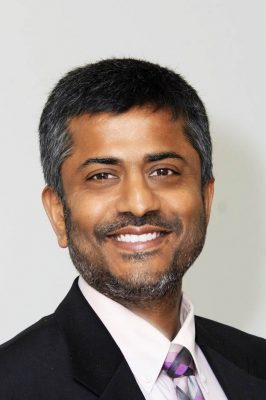
Ajit Gopalakrishnan is the Chief Performance Officer for the Connecticut State Department of Education (CSDE). The CSDE Performance Office is comprised of about 25 dedicated professionals who work to support the Performance Office mission to improve student outcomes through the use of data and technology. In his capacity, Ajit oversees data collection, student assessment, psychometrics, data warehousing, reporting, research/analyses, and school/district accountability functions for the CSDE. During his tenure, the CSDE has successfully developed and implemented a new data warehouse and reporting platform, revamped the school and district accountability system, and implemented the Smarter Balanced assessments. He has directed research, analyses, and evaluation activities to transform data into actionable information and guide decision-making by the State Board, Department offices, local districts, and community agencies.
1. For many members within our UConn ECE Community, the Connecticut State Department of Education (CSDE) is often viewed as a bureaucratic agency focused primarily on the oversight and compliance within PK-12 education. What would you like members of the UConn ECE Community to know about the CSDE Performance Office, and the incredible work you and your team do daily to support districts, schools, and students?
As a state agency, we have a responsibility to be good stewards of state and federal funds, so oversight and compliance are necessary aspects of our work, but they are not ends unto themselves. It is vital that we view those mechanisms as opportunities to partner with district/school leaders and other stakeholders so that together, we create the conditions that result in equitable outcomes for all students. We bring this mindset of collaboration to all aspects of our work, whether it be creating interim assessments to support instruction, collecting data about things that matter, eliminating processes that do not add value, designing measures that reflect our priorities, and publishing reports that share both our collective accomplishments and our failings. Doing this fairly across the more than 200 school districts is complex but when we truly listen to our stakeholders and try our best to do the right thing, good things happen for students.
2. Connecticut’s Next Generation Accountability System, developed by the Department in partnership with key stakeholders, has been a nationally recognized by the Council for Chief State School Officers (CCSSO) as a leading approach for the holistic measurement of district performance and student growth over time on a broad set of 12 indicators. Since NextGen’s launch, what do you believe has made the system an instrumental tool in driving statewide and local changes in policy and practice?
There are five key features that have been instrumental to driving statewide and local change:
- The first is the holistic nature of the system. While student performance on standardized tests remains an important part of the system, the incorporation of other measures like chronic absenteeism, college and career readiness, on-track to high school graduation, postsecondary entrance, arts access, and physical fitness have brought many more people to the accountability table. I have seen this happen not only within the CSDE but also in schools and districts across the state. This is a good thing because the answers to why some students may not do well in school does not rest solely with English and Math teachers.
- The second feature is the value the system places on academic growth. This emphasis is changing the conversation in elementary and middle schools in important ways. Unlike the No Child Left Behind (NCLB) Act where a focus on “bubble” students was rewarded, the growth mindset in the Next Generation Accountability System rewards the learning of all students across the achievement spectrum.
- Thirdly, equity is woven in throughout the system in two key ways. Separate points toward the overall score are awarded to students with high needs; these are students who are English learners, students with disabilities, or students from low-income families. The bottom line here is that a school can earn top honors only if their students with high needs are doing reasonably well. This has been a big area of focus and conversation in schools. In addition to separate points for students with high needs, schools with outlier achievement or graduation rate gaps are dropped a category.
- The fourth critical feature is that most indicators are not built as all-or-nothing in terms of the points that a school can earn. Every indicator has an ultimate target. Points for each indicator are prorated based on the percentage of the ultimate target achieved. The key takeaway here is that incremental improvement toward the target is rewarded in this system.
- Lastly, and perhaps the most important characteristic is that this system, from its inception, has been shaped by the input of stakeholders. Getting feedback from stakeholders is not a one-time activity but something that’s been an ongoing feature. I am particularly grateful to the input from our Accountability Advisory Group of district/school leaders and accountability experts as well as the Connecticut Association of Public School Superintendents (CAPSS) Assessment and Accountability group of superintendents for their thoughtful and honest feedback from the very inception of this system. I am also appreciative of the many educators who reach out to us periodically to offer their thoughts and insights on a range of topics such as school classification, career readiness, physical fitness, dual credit, arts courses, and chronic absenteeism.
3. This past summer, the Department recently updated NextGen accountability indicator 5 (Preparation for Postsecondary and Career Readiness – Coursework) and indicator 6 (Preparation for Postsecondary and Career Readiness – Exams and College Credit) to be more inclusive of concurrent and dual enrollment programs. What led to this shift and how does it align with the CSDE’s vision for improved access to college and career readiness?
First, a correction. The Next Generation Accountability System has always recognized concurrent/dual enrollment course participation towards Indicator 5. Effective 2021-22, credits earned by students in concurrent/dual enrollment course offerings will also count toward Indicator 6. While Indicator 5 looks for participation in courses, Indicator 6 looks for an outside objective validation of postsecondary readiness. In prior years, we looked for students meeting benchmark on any exam i.e., SAT, ACT, Advanced Placement, or International Baccalaureate. Going forward, we will also recognize students who may not meet benchmark on an exam but have earned at least three non-remedial college credits with a C or better in dual/concurrent enrollment courses. This shift to recognize success in dual credit courses was the direct result of ongoing input from practitioners and the cooperation from our higher education partners. It makes perfect sense to recognize dual credit course completion because unlike passing an AP or IB exam which still requires acceptance by a college, dual credit courses are already on a college transcript!When we released our 2021-22 accountability results in December, we also released a detailed Indicator 6 report on EdSight that shows the different ways in which students meet the Indicator 6 standard. This highlights the dual credit pathway and brings attention to the importance of students earning college credit prior to high school graduation.
4. While the increased inclusion of concurrent and dual enrollment programs along with Advanced Placement (AP) and International Baccalaureate (IB) in the CSDE’s NextGen Accountability Index is a critical step in expanding access to college courses, it doesn’t align with U.S. News & World Report’s traditional AP/IB focused metrics for college readiness. What advice would you give a building leader or a school district leader who may be pressured to adhere to U.S. News & World Report school rankings over the CSDE NextGen Accountability report?
These are difficult conversations, no doubt. My advice to leaders when having such discussions locally is to always place the student at the center, and then support the entire school community to align their goals and values around the interests and needs of your students. I suspect that this will lead to a both/and perspective, not an either/or. While AP/IB type offerings may interest some students, others may prefer dual credit. Obviously, the AP and IB programs (along with the SAT and ACT exams) have good “brand” recognition among the general population. To improve awareness of dual credit, the CSDE in the coming years will be working with our higher education colleagues to build a robust system of dual credit opportunities across the entire state. Part of this effort will involve a public relations campaign so that families, board members, legislators, and other stakeholders see the value of dual credit opportunities offered through our public and private institutions for higher education as a valid and effective approach to prepare our students for postsecondary success. Including dual credit in Indicator 6 is the first step in that journey.




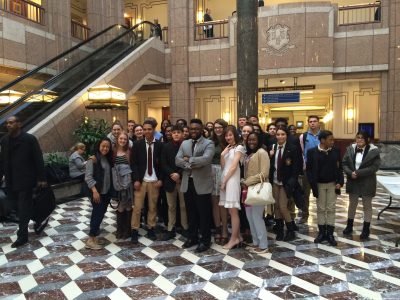

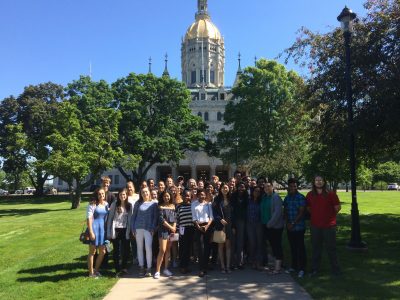














 trying to understand the ways that 1004 leads to and supports 1007. The two-day seminar & workshop engaged ECE English Instructors in current scholarship and practices in composition studies and provided a supportive, collaborative environment for experiments with classroom application. They invented, explored, and tweaked course materials in a spirit of shared inquiry and discussion.
 Marine Science Symposium
  Dylan Gaffney, New Fairfield High School In 2021, I graduated summa cum laude from UConn with dual degrees in Political Science and History. I was a three-time Babbidge Scholar, an Honors Scholar, and a member of Phi Beta Kappa. I am currently a 1L at Columbia Law School, where I am pursuing my JD. My ECE experience as a senior in high school was a major asset in accomplishing these goals, as it provided me a crucial head start in developing college level academic skills, such as scholarly research and writing.

 Kenneth Gouwens, UConn ECE Faculty Coordinator for History 1400, arrived at UConn in 1998, and served four years as coordinator for both HIST 1300 and HIST 1400. He took leave from the position when he went abroad for a year on a fellowship, but resumed the position as Faculty Coordinator for HIST 1400 again in 2016. It’s hard for Dr. Gouwens to pick a single memory most dear to his heart. He states, “This has been the most meaningful “service” I’ve done in my career, and I found it both edifying and fun to work both with Brian Boecherer as my supervisor and with the teachers. The one thing that stands out, and of which I’m proudest, is that with strong support from Brian, I was able to assemble a team of four outstanding teachers to help me design and edit a new proprietary course reader, a substantial project which we completed in January. I’m really proud of the product and of my collaborators, Mark Peters, Trina Bowman, Jen Dufault, and Martin Glasser.” The UConn ECE HIST 1400 200-page reader, exclusively for ECE-certified history instructors, is now posted on the HIST 1400 HuskyCT site! Dr. Gouwens and his wife have retired to Ft. Lauderdale, which they love. He explained that his retirement so far includes, “While we have lots of travel plans now that the pandemic has let up (Machu Picchu just a month from now, for example), I am continuing with my scholarship: in February I sent off the final version of another Latin edition and English translation of a work by Paolo Giovio (a Renaissance humanist), submitted an article to an Italian journal in March, and just now am completing another article for a different Italian journal. After that I’ll return to work on my book project, which concerns how Renaissance intellectuals used descriptions of monkeys to talk about human nature, and vice-versa. Now of course I can work at my own pace!”
 Frederick Turner, UConn ECE Faculty Coordinator for Political Science, had retired from his department back in 1997, spent some time at the Universidad de San Andres outside Buenos Aires, Argentina, and then held a second career teaching at Hartford’s Bulkele High School from 2003 until 2016. Dr. Turner graciously acted as the UConn ECE Political Science Faculty Coordinator from 2004 through the end of the 2021-2022 school year. Dr. Turner’s fondest memory as Faculty Coordinator is New York Times’ Jamelle Bouie’s visit for the 2022 UConn ECE Political Science Professional Development Workshop. A long-time admirer of his writing, Dr. Turner shares, “[I] learned that both his parents were in the Navy, so he grew up in Virginia Beach, and that his most cherished academic memory is of a seminar at the University of Virginia where the professor had students read Edmund Burke and Thomas Paine and then debate the French Revolution as though they were observing it then. Bouie said that he thinks back to that seminar all the time. I saw Bouie give a lecture to a large audience on Thursday night