Events

2025 UConn ECE Cardboard Boat Race


By Jessica Dunn

Photos by Gordon Daigle and Michael Illuzzi


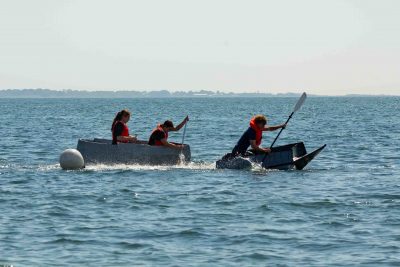
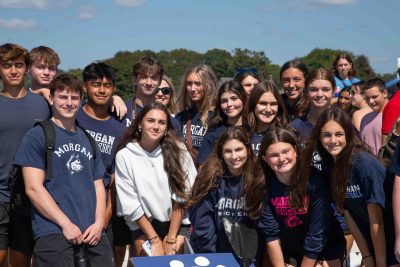
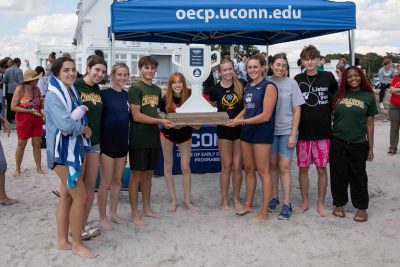
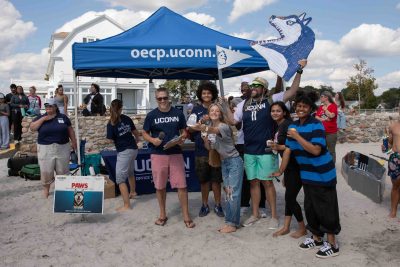
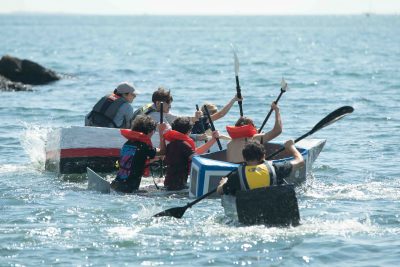
On September 19th, UConn ECE hosted the annual Avery Point Cardboard Boat Race with the thrilling theme “You’re Gonna Need a Bigger Boat,” celebrating the 50th anniversary of Jaws. This year’s challenge invited students to channel their creativity and engineering skills into crafting cardboard and duct tape vessels that could float and hopefully survive the waves! The event drew 17 high schools from across the state, with 31 boats competing and more than 450 participants cheering from the shoreline.


From sleek speedboats to jaw-dropping shark themed designs, the ingenuity on display was nothing short of impressive. Adding to the excitement, Jonathan XV made a special appearance, bringing school spirit and plenty of photo opportunities. The race was filled with suspense, laughter, and unforgettable moments as students tested their designs against the elements. Beyond the fun and the academic morning sessions with esteemed UConn Avery Point Faculty and Graduate Students, the event highlighted teamwork, problem-solving, and the vibrant community that UConn ECE fosters among partner schools. Want to experience for the first time or relive the excitement of the boat race?


Thank You to our Participating High Schools

• Bethel High School
• Branford High School
• Bridgeport Aquaculture

• Daniel Hand High School

• East Granby High School
• Ellington High School
• Emmett O’Brien Technical High School
• Franklin Academy
• Holy Cross High School
• Ledyard High School
• Manchester High School
• The Sound School
• Stratford High School
• Terryville High School
• The Morgan School
• University High School
• Waterford High School


Heat 1 Trophies

#1 Waterford High School – Bruce 2

#2 Ellington High School – Silver Bullet
#3 BRASTEC – Bruce

Heat 2 Trophies

#1 Holy Cross High School – Totally Jawsome

#2 The Morgan School – Finley
#3 University High School – Meg-a-lodon

Heat 3 Trophies

#1 Bethel High School – We’re Gonna Need a Bigger Boat
#2 Waterford High School – Amityville Tourist
#3 Ellington High School – Barknado

Heat 4 Trophies

#1 Waterford High School – Sharky
#2 Ledyard High School – The Fin-isher#3 Bethel High School – Bruce

Championship Race

Holy Cross High School – Totally Jawsome


Best Visual Design Award: The Morgan School (Finley)


Best Boat Name Award: Manchester High School (The Pawseidon Adventure)


Interdisciplinary Collaboration Award: East Granby High School (Chum Runner)


People’s Choice Award: University High School (Meg-a-lodon)


Scan QR code to view

the “Ellington Armada – Keeping Knowledge Affloat” video

Neag School Hosts Second Annual ECE Day for High School Students


By Mikala Kane, Director of Communications & Digital Strategy, UConn Neag School of Education
Photos by Gordon Daigle and Michael Illuzzi


EDCI 1100, EPSY 1100, and EDLR 2001 students visit Storrs to learn more about UConn and potential careers


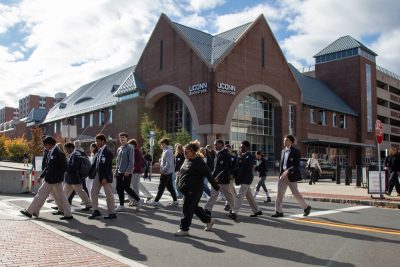
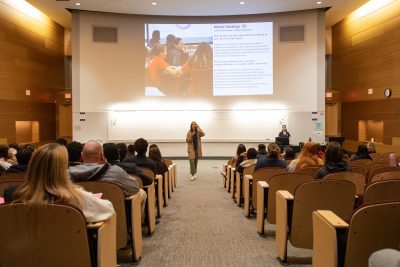
On October 24, the UConn Neag School of Education hosted its second annual Early College Experience Day for high schoolers participating in its Early College Experience course offerings. Over 110 students from eight schools spent the morning in Storrs, learning more about UConn, the Neag School, and potential careers in education and sport management.


“In 2024-2025, our ECE courses provided the opportunity to earn college credits to 924 highschoolers in 45 schools,” Dean Jason G. Irizarry says. “That is a significant increase from only 201 students in five districts in 2021-2022, when we piloted our courses. Offering this opportunity for high school students to learn more about higher education, as well as future career paths, is central to our goal of improving access to education.”


Irizarry began the day’s activities by welcoming students and teachers from Bridgeport, Burlington, Enfield, Milford, Simsbury, and Waterford. All either teach or take EDCI 1100: If You Love It, Teach It; EDLR 2001: Contemporary Issues in Sport; or EPSY 1100: Introduction to Special Education


The group then heard an overview of the Neag School from ECE Faculty Coordinators and professors, as well as Assistant Professor-in-Residence Danielle DeRosa and Assistant Dean and Certification Officer Ann Traynor.


“Supporting a vibrant ECE portfolio is a priority of the Neag School and the Sport Management Program,” says DeRosa, who is also one of the Neag School’s ECE Faculty Coordinators. “It allows high school students to earn UConn credit and experience the rigor of our courses. This experience helps to facilitate college readiness and prepare students for the student success journey.


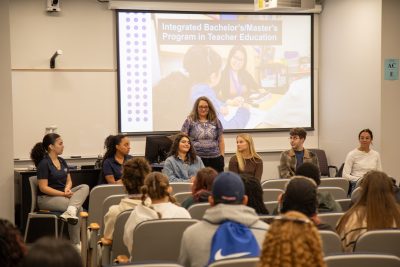
Around midmorning, students enjoyed tours of campus and the athletics facilities before attending sessions specific to their classes. Those enrolled in EDCI or EPSY courses attended a panel moderated by Director of Teacher Education Alyssa Hadley Dunn and hosted by current Neag School students, who offered insights about the Integrated Bachelor’s/Master’s Teacher Education Program. The high schoolers enrolled in EDLR 2001 attended the Business, Sport and Human Rights panel at UConn’s Dodd Human Rights Summit, which was dedicated to Sport and Human Rights this year.


“Visiting UConn for my ECE class was a valuable experience,” says Marek Nardi, a student from Lewis S. Mills High School in Burlington. “Seeing the campus, meeting faculty, and learning how college courses operate gave me a clearer understanding of what academic life looks like and what standards I should aim for going forward.”


“Being able to take my students to UConn Storrs is an incredible experience,” says Erik McKay, an educator from Lewis S. Mills High School. “UConn is providing insight into what college looks, sounds, and feels like. There are many intangible experiences my students get from being on campus, seeing the athletic facilities and classrooms, and meeting and working with the UConn faculty.


Overall, it is a great day for all educational stakeholders involved, and I look forward to doing it again in the future.”


• Bristol Eastern High School

• Capital Prep Harbor School
• Enfield High School
• Jonathan Law High School
• Joseph A Foran High School
• Lewis S. Mills High School
• The Ethel Walker School
• Waterford High School

Anthropology Class Visit


By Jessica Dunn


On November 14th, Jeremy Pilver from Farmington High School along with 16 enthusiastic UConn ECE ANTH1500: Great Discoveries in Archeology students, visited the UConn Storrs Campus for an unforgettable day of hands-on discovery.


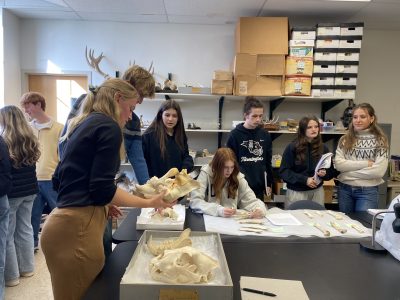
The group explored archaeology and ancient lifeways through three dynamic workshops. Under the guidance of Dr. Daniel Adler, students experimented with stone tool technology, learning how early humans shaped tools for survival. They then delved into ancient plant use and food practices with UConn ECE Anthropology Faculty Coordinator Alexia Smith, uncovering how agriculture transformed societies. Finally, with Sophia De Schiffart, they examined ancient animal use, gaining insight into the critical role animals played in past cultures.


From shaping stone tools to exploring ancient diets and animal lifeways, the experience gave students a rare chance to step into the shoes of archaeologists and uncover the secrets of the past. Guided by UConn experts, they didn’t just learn, they experienced archaeology in action!

UConn ECE MELD


By Dr. Michael Kienzler, Assistant Professor UConn Chemistry

Dr. Fatma Selampinar UConn ECE Faculty Coordinator for Chemistry, Associate Professor in-Residence UConn Chemistry


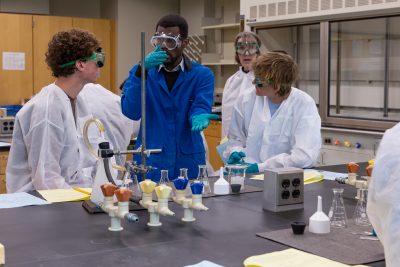
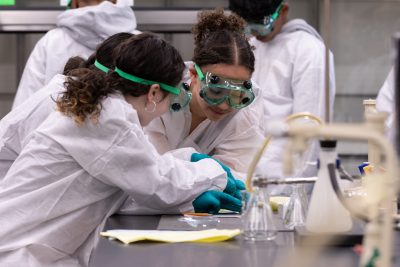
More than 240 students from 12 high schools—Rocky Hill High School, O.H. Platt High School, Enfield High School, Berlin High School, The Woodstock Academy, University High School of Science and Engineering, Jonathan Law High School, Joseph A. Foran High School, Daniel Hand High School, Bristol Eastern High School, Academy of Information Technology & Engineering, and Lewis S. Mills High School—across Connecticut gathered at the University of Connecticut’s Chemistry Building for the annual ECE Chemistry Lab Day. Held over two sessions on May 20 and May 22, 2025, the event provided students with immersive, hands-on laboratory experiences that offered exposure to UConn lab environments and research practices.


The MELD (May ECE Lab Day) event was coordinated by the UConn Early College Experience Program Office and Dr. Fatma Selampinar, Professor in Residence and UConn ECE Chemistry Faculty Coordinator. Science activities were hosted by Assistant Professor Dr. Michael Kienzler. Following Dr. Kienzler’s presentation, students transitioned to six undergraduate teaching laboratories, where they conducted a series of experiments designed by Dr. Kienzler. These sessions were supervised by graduate students, providing participants with hands-on experience in a collegiate laboratory setting. This collaborative effort offered high school students an immersive introduction to advanced chemical research and methodologies, fostering early engagement with the scientific community at UConn. Students synthesized three different derivatives of the dye azobenzene, a compound known for its photoswitching properties—changing structure when exposed to specific wavelengths of light. The students then investigated the properties of the azobenzene they made using ultraviolet/visible spectroscopy and thin-layer chromatography. These experiments mirror ongoing research going on in Dr. Kienzler’s lab.


Beyond the laboratory work, participants engaged with UConn’s advanced scientific equipment. Dr. Selampinar coordinated sessions introducing students to Nuclear Magnetic Resonance (NMR) spectroscopy, while graduate students provided insights into mass spectrometry techniques. These experiences aim to familiarize students with tools and methodologies prevalent in modern chemical research. The UConn ECE Chemistry Lab Day not only enriches students’ understanding of chemistry but also fosters connections between high school students and UConn faculty and graduate students. Such initiatives underscore the UConn ECE and Chemistry Department’s commitment to bridging secondary education with higher learning, inspiring the next generation of scientists.

UConn ECE Chinese Talent Show

By Dr. George Chunsheng Yang | Photos by Gordon Daigle and Mike Illuzzi


March 14, 2025


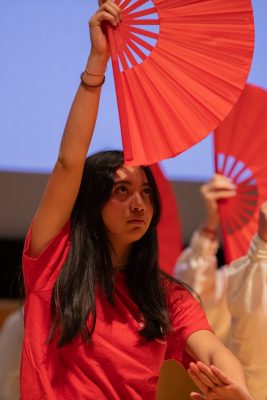
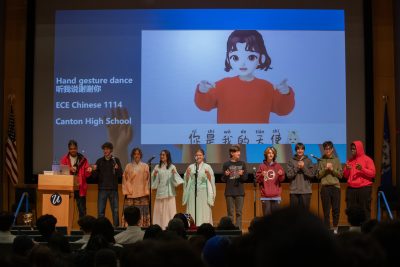
On March 14, 2025, UConn ECE, in collaboration with UConn’s Language, Cultures, and Literature (LCL) Chinese program, hosted a Chinese Talent Show for both UConn ECE Chinese high school students and UConn Chinese students. Hosted at the UConn Student Union Theater, the event featured more than 20 student-led performances, and drew an audience of more than 150 students, instructors, and community members, all eager to witness the creativity and dedication of high school and college Chinese learners.


The event showcased a wide variety of performances, including solo and group singing, traditional and modern dance, Chinese poem recitations, and engaging sanju ban (a comic dialogue style popular in Chinese storytelling). Between the acts, UConn ECE Chinese instructors hosted interactive mini-games and cultural trivia sessions, keeping the audience entertained and engaged throughout the event.


At the end of the event, three standout performances were honored with special awards. The Best Language Expression Award went to Amity High School for their flawless Mandarin poem recitation. The Best Performance Award went to Norwich Free Academy for their powerful Taiji dance. The most Popular Award went to Amity High School for their popularity among the audience.


The event was proudly sponsored by UConn ECE Office and UConn Chinese Program. The Talent Show reflects a broader community-wide initiative to foster cultural understanding, confidence in Chinese communication, and global competence through language education.

High School Engagement

By Jessica Dunn / Image by Carissa Rutkauskas


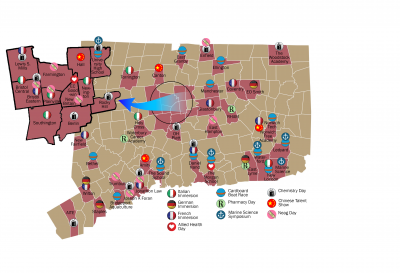
In the winter 2024–2025 edition of our magazine, we introduced a map showcasing the Connecticut high schools that participated in UConn ECE student events during the Fall semester. Since then, the map has been expanded to capture the full scope of the 2024–2025 academic year—including all student events held throughout the Spring semester.


This updated version reveals an even broader level of engagement, with many additional high schools now represented. The growth in participation highlights the increasing enthusiasm among schools across the state to connect with UConn ECE student enrichment opportunities with a deep investment and emphasis on access for all students. From large urban districts to small rural communities, the updated map tells a compelling story of how academic curiosity and opportunity continue to spread.

We’re proud to see such strong involvement from our partner schools and applaud the efforts of instructors, students, and UConn ECE Faculty Coordinators who make these valuable learning opportunities possible. We look forward to continuing this momentum and encourage all high schools to take advantage of the valuable opportunities available to students across various disciplines.

UConn ECE Health Sciences Day

By Dr. C. Michael White


This year’s Health Sciences Day at the UConn School of Pharmacy brought together high school students from East Lyme, RHAM, and Waterbury high schools. They engaged with UConn faculty members (Ms. Laura Nolan and Drs. C. Michael White, Robin Bogner, Jennifer Girotto, and Nathaniel Rickles), a CVS pharmacist/UConn Alum ‘93 (Dr. Galushko), and a P4 Pharmacy Student (Ms. White) in three hands-on activities.


First, they navigated a cardiac arrest on our simulation manikin where they had to recognize the rhythm, give chest compressions and mask valve artificial breathing, and then select, draw up and administer the correct doses of drugs in between defibrillator shocks. Next, they moved to the compounding laboratory where they were able to create brand new dosage forms. This is something that pharmacists do for patients who cannot tolerate the normal doses of medications, cannot swallow pills, or require a cream that does not exist commercially. Finally, they learned how to draw up medications like vaccines, insulin, and weight loss drugs into syringes, expel the air bubbles, and administer them properly in muscle or the subcutaneous fat of the arms or belly.


This was followed by a luncheon with pizza, a brief presentation on careers in pharmacy ranging from community, hospital, nuclear, pharmaceutical industry, and managed care settings, and then informal discussions about the day’s events. Students loved intermingling with those from other schools, seeing the UConn campus, and applying what they learned in their UConn ECE courses to real world scenarios, but in a simulated environment.

Professional Development Workshops

By Caroline Lynch, UConn ECE Graduate Assistant, Master’s Student, UConn, Higher Education and Student Affairs


We’ve had yet another eventful semester for the UConn Early College Experience Program, including 22 unique professional development experiences for our certified ECE Instructors. A mix of on campus and virtual events were held, for our wonderful instructors from Allied Health, American Sign Language, Animal Sciences, Art, Asian & Asian American Studies, Digital Media and Design, Earth Sciences, Education, Educational Psychology, Environmental Science, French, German, History, Human Development & Family Sciences, Italian, Kinesiology, Latino & Latin American Studies, Political Science, Spanish, and Statistics as well as our Library Media Specialists. Please enjoy a brief overview of the professional development highlights from the Spring 2025 semester!


February 26, 2025: Political Science Workshop


For our first professional development event of 2025, we hosted a virtual conversation with our Political Science instructors on the theme Bringing Politics into the Classroom. The morning opened with a faculty discussion surrounding the effects of rising authoritarianism in world politics, with the goal of equipping instructors with strategies for teaching their students to understand and recognize harmful trends and their consequences. A major highlight of the day was a guest address by Denise Merrill, UConn alumna and former Connecticut Secretary of State.


March 12, 2025: Animal Sciences Workshop

Animal Science instructors met on the Storrs Campus in early March, where they had the opportunity to observe a class section of ANSC 1602: Behavior and Training of Domestic Animals. The true bonus highlight of the day was a trip to the UConn Dairy Bar, where instructors got to experience our world-famous UConn ice cream!


March 14, 2025: French Workshop


On March 14th, our ECE French Instructors convened on the UConn Storrs Campus for their annual professional development conference. The morning consisted of a lecture on the theme of childhood and its manifestations in French cinema, led by Assistant Professor in French Studies, Dr. Raphaël Koenig. Then, in the afternoon our instructors were given the opportunity to visit UConn’s Ballard Institute and Museum of Puppetry for a tour and a lecture on puppetry in France and French-speaking countries led by Dr. John Bell, Director of Ballard Institute and Museum of Puppetry and Associate Professor in the Dramatic Arts Department.


April 4, 2025: Italian Workshop


Our Italian instructors took a field trip to the Wadsworth Atheneum Museum of Art in Hartford, CT for a private tour of the galleries. Following the tour, instructors got to experience an informative lecture courtesy of Stephanie Barnett, School & Teacher Programs Manager for the Atheneum.


April 11, 2025: Spanish Workshop


Marking our largest professional development workshop of the semester, over 85 certified Spanish instructors joined us on the Storrs Campus on April 11th. The group was joined by Professor Oscar Martin, chair for the Department of Languages and Literatures at Lehman College. Professor Martin delivered a lecture entitled “Estudiantes, hay camino y se hace camino al andar” (Translation: “Students, there is a path, and the path is made by walking”). Following the keynote address, instructors had the opportunity to work on a collaborative group project with their peers.


April 25, 2025: EDLR 2001 Workshop


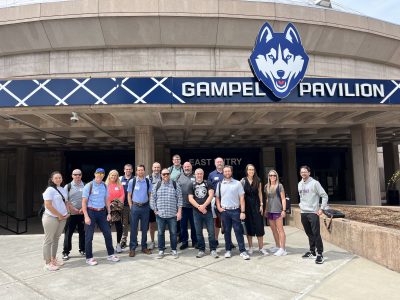
It was a beautiful day in Storrs when we were joined by a group of 15 EDLR 2001: Contemporary Social Issues in Sport instructors. Thanks to the continued efforts of Dr. Danielle DeRosa, our Faculty Coordinator for Educational Leadership, this group has grown to include teachers from a variety of unique disciplines, including History, English, Health/Physical Education, and Social Studies. Each provides a unique lens through which to teach their students about the industry of sport. Instructors were given the opportunity to meet with Eric Schneider, Associate Director of Athletics and Compliance at UConn, to discuss the ever-evolving landscape of college athletics, including NIL (name, image, and likeness) policies. The afternoon was topped off by a walking tour of several of UConn’s athletic facilities, including Gampel Pavilion, the flagship site of the “Basketball Capitol of the World”, along with the baseball, softball, volleyball, and ice hockey facilities.


April 24 and 25, 2025: English at the 14th annual Conference on the Teaching of Writing


This semester, our ECE English instructors were invited to attend the 14th annual Conference on the Teaching of Writing, entitled “Joy to You and Me: Making Space for Joy in the Writing Classroom.” This conference challenged our instructors to embed joy into their pedagogy, finding it in unexpected places amongst upheaval and dread, and encouraging their students to embrace it. The keynote address, titled “Hell Yes, Joy is a Strategy: Reclaiming Play in Writing Assessment,” was delivered by Dr. Stephanie West-Puckett, Associate Professor of Writing & Rhetoric at the University of Rhode Island. Attendees of the conference were treated to a wide variety of sessions and workshops to choose from and had the opportunity to connect with individuals across the UConn First Year Writing community and beyond. It’s been an incredible semester! To find more information and photographs from these and the rest of our professional development events, please feel free to visit the “ECE PD Blog” on our website. As the spring comes to a close, we extend our thanks to our Faculty Coordinators, guest contributors, and instructors for their time and commitment to the ECE program. We’ll be back come Fall with plenty more professional development experiences, and we look forward to seeing many of you then!

ECE Wallace Stevens Poetry Contest

By Sean Frederick Forbes, Ph.D. Director, Creative Writing Program UConn English Department


I’ve been writing narrative poetry and creative nonfiction for over twenty years, and when I am teaching undergraduate introductory level creative writing courses, my students often ask me a variation of two questions: “what inspires you to write?” and “what topics do you write about?” I respond by telling them that the familial and personal narratives my maternal grandmother told me as a child spurred a deep curiosity within me about how to tell a story, even if it may seem mundane to me. While I do prefer to write about my family’s ancestral lore acting in conversation with my grandmother’s stories, sometimes “big ideas come from out of the blue,” as is the theme of this year’s ECE magazine, in which I have found myself writing a poem about visiting the Dachau Concentration Camp Memorial Site in Bavaria, Germany in December 2015, or writing an ekphrastic poem (from the Greek, is a poem that describes a work of visual art, such as a painting, sculpture, or other form of visual art), about a painting titled “Misty Morning” by the Connecticut-based artist D. Stone. Memories, images, facts, emotions, questions, longings, yearnings, etc. are what people experience on a daily basis, a major and vital part of the human condition, and expressing oneself in the written word has the ability to be transformative and meaningful to the listener/reader, as well as the writer.


This year the ECE Wallace Stevens Poetry Contest received forty-five poetry packets. My fellow judges, Kyle Barron and Anh Le—both are PhD candidates in the English department at UConn and are creative writers—and I selected five poetry packets by Hannah Guo, Sapphira Costa, Yimin Wu, Hermione Ildefonso, and Naima Garcia as the first, second, third, and two Honorable Mention winners, respectively. On a Thursday morning in mid-March, Kyle, Anh, and I held a Zoom meeting to discuss and select the winners, and after an hour of deliberating, the three of us were impressed by the subjects and topics expressed in all of the submissions. There were five poets whose writing mesmerized us greatly for the levels of craft, creativity, imagery, depth of language, and range of topics and poetic forms and styles.


In the first two lines of the poem “Listening” by Hannah Guo, the reader is advised to “Stop in your tracks—let the autumn wind / gently caress your face and lift your chin skyward,” a gesture that allows one to experience a season and all that it offers. The speaker employs the use of the directive by addressing the reader as “you,” and while this tone may seem demanding, if not commanding to some readers, often times one needs to be reminded about the benefits of embracing an autumnal atmosphere of “distant bonfires, fallen leaves, rain-soaked bark— / a hint of cold earth, and the ghost of sunburnt grass.”


The speaker in Sapphira Costa’s poem “Bisavó,” the Portuguese word for grandmother, employs the literary technique of the braided narrative to highlight how three generations of women in her family approach personal silences. The speaker’s great-grandmother was regulated to domestic duties and took on hidden silences about her pains and worries, “her hands learned to hide her heart / to place away her strengths and burdens,” and the speaker’s grandmother took on the same domestic roles and responsibilities and inherited even deeper silences about her concerns and sorrows, “the quiet steadiness of hands that knew work.” The speaker is a young poet, writing about these silences in open forum, and at the end of the poem ponders if hiding these silences is a kin to drowning, in an emotional and psychological sense, as “if the flood isn’t the water rising, / but the weight of everything that is left unsaid.”


In Yimin Wu’s poem “Anticipating Ardor,” the speaker employs tercets, stanzas of three lines, to create a typographical juggling act of imagery and sound enacted on the page. The scene depicts a speaker sitting on a cold park bench deeply engaged with the architectural landscape of the park juxtaposed with the wild, creature-laden lushness of the forest nearby, and the mysterious wonders of the universe that surrounds, with each stanza offers a range of sonic and visual stimuli: “cicadas still chirping, my eyes snap open. / The trail of a shooting star glimmers above, / Almost akin to a strand of blond hair.”


Hermione Ildefonso’s poem “Gemini Syndrome” recounts the moment a speaker confronts, and transforms into, the dual persona of the Gemini zodiac sign via their reflection in a foggy mirror. The speaker asks, “what is a twin soul in a singular body?,” which is signaled by an inner desire and longing to comprehend their mercurial nature and patterns of behavior. The speaker understands that they’re changing as the world changes, and there is deep complexity, but also splendid wonder in who they are: “So, here I am, at the edge of knowing / with trembling hands, I scatter petals of possibility.”


The speaker in Naima Garcia’s poem “The Dead End at Daybreak” offers the reader a narrative about the Second Battle of Ypres that was fought between April 22 and May 25, 1915 during the First World War. This battle was a means to gain control of land to the east and the south of the Flemish town of Ypres in western Belgium. The use of the historical perspective and the speaker’s tone of voice provides the reader with a closer lens into this moment of war, in which the speaker states that “…Ypres / would never be the same glistening, tourist attraction it had been / before;” a startling image of the future juxtaposed with the “fruity scent of the lavenders.”


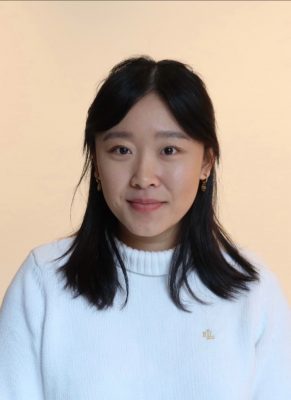
Hannah Guo
Hannah Guo is a senior in high school from Woodbridge, CT. She plans to attend Rice University in the fall and is passionate about the interactions of writing, community, and civic engagement. Watching words move, inspire, and unite people fills me with purpose. Since the very beginning, we have all been feelers. We have been storytellers. Leaning into that gives me strength.


Listening
Stop in your tracks—let the autumn wind
gently caress your face and lift your chin skyward
It wraps around your feet and whispers,
I can take it from here,
so you listen, and let it.


The wind smells like distant bonfires, fallen leaves, rain-soaked bark—
a hint of cold earth, and the ghost of sunburnt grass—
You smell like the wind.


Tell me, have you called the wrong people home?
Have you left your heart on regret’s shelf ?
Have you cradled your fear
when you should have been grasping at joy?
Have you forgiven yourself?


Speeding up, you feel your heart thumping,
Two feet trying to leave the ground,
The wind is trying, trying! trying!
Hair unfurling, winding into yours the way yarn binds itself to a spool
Only to stop at a foundation of solid wood,
chest rising, breathing precious life in—
The egrets keep soaring, their wings fanned out, spelling goodbye


Breathing hard you ask
the grand Oak
if he loves all his old selves
He says not necessarily—but they have made me so
I hold them every day and tell them they have done
a good job


And the Willow and Birch trees chime in, rustling,
You can also live a hundred lives
You can keep each one
And you realize they are right; you have—
And you will.


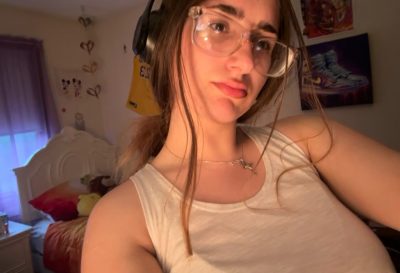
Sapphira Costa
Sapphira Costa, a senior at Manchester High School, has been writing stories for as long as she can remember, finding a second home between dusty library shelves and thrifted notebooks filled with poems about longing, girlhood and becoming. She dreams of studying neuroscience to better understand the mind, but it is through poetry that she has always understood the soul. Her work has been recognized with two Gold Keys, two Silver Keys and an honorable mention from the 2022 and 2024 Scholastic Arts & Writing contest.
 

Bisavó
Born from the shadow of terracotta roofs,
where my great-grandmother once danced beneath the orange
blossoms,
growing among the vineyards and olive groves.
Her bare feet kissed the earth, dusting it with centuries of soil.
Her hands heavy with the weight of the harvest,
the patterns of the season etched into her skin.
She learned early to bear the weight of others as her own.


In Portugal, a women’s role was carved into the land,
she was the earth.
Her roots ran deep into the soil,
unshaken by the weight of family, traditions and expectations of
silence.
Her hands prepared meals, washed clothes, and raised children.
They sewed respect into every seam, served faith onto ever
plate,
all while a man who claimed her loyalty,
lingered in the arms of others.
Her hands learned to hide her heart,
to place away her strength and burdens.


The Church whispered to her,
reminded her that god watched the patient,
as if her silence was the way to sainthood.
Her faith instructed her that to speak of pain was a sin.
That her worth lied in her sacrifice,
in her ability to carry the burdens without complaint.


My great-grandmother inherited these beliefs like heirlooms,
tucked into the folds of a life lived passed down between kitchen
walls
and church pews, stitched between the pages of prayer books.
She never spoke of sorrow,
because sorrow was the quiet hum
of wind through azulejo courtyards,
where the walls held everything she couldn’t say.


She hemmed her sorrow into the edges of tablecloth and
dresses too long,
whispered them into the bread and malassada she baked,
but she never let them surface.
Emotions were a luxury,
an indulgence she could not afford.
They belonged to fado songs that carried her pain,
its melancholy seeping into the edges of every conversation
she never had.


In America, there is no room for this kind of quiet.
Here, feelings must be displayed like the fruits
at a Saturday market, ripe and open to touch.
But my grandmother,
she inherited her silence,
like the faded yellow on the Barcelos Rooster of her grand-
mother’s apron,
the quiet steadiness of hands that knew work
and “sim senhor”
but not words.


In the kitchen, caldo verde simmers,
the steam rising like the breath of something long held back
and I feel the weight of generations in every spoonful.
There is no fado here, only the chatter of this new land
that asks for too much and understands too little.
How can I explain the way my grandmother loves
in a language with no space for silence?


My great-grandmother never questioned her role.
Her days were spent in service
to family, to faith,
to the land that gave little but asked for much.
And my grandmother too, learned to swallow her voice,
to wear her silence as armour.
to carry the weight of expectation,
with silence, with grace.


But I live in a country that demands my voice,
where I am expected to be open,
to name my hurts, to name my struggles,
but my mouth is filled with saudade—
the longing for what is lost
before I ever knew it.


My great-grandmother taught my grandmother that silence
was safety,
and that to say too much
was to invite the world in too closely,
to let the sea flood the village.
But in this American land,
I wonder if silence is its own kind of drowning,
if the flood isn’t the water rising,
but the weight of everything that is left unsaid


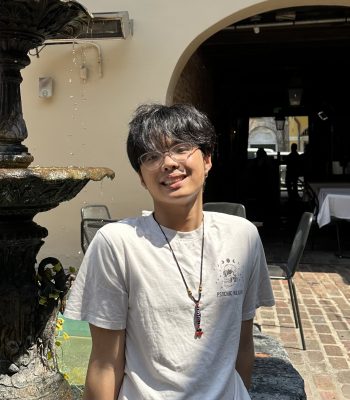
Yimin Wu


Yimin Wu is a senior attending Hall High School in West Hartford, where she’s the president of her school’s Creative Writing Club. Beyond the pen, she also loves learning foreign languages and likes to game in her free time. I’ve loved writing since elementary school, and for me, it’s a valuable way to express my authenticity and Asian-American experience. I enjoy going to local open-mic nights and share poetry together with friends.
 

Anticipating Ardor


Streetlights flickering, fireflies flashing,
I solemnly sit on the cold park bench,
Awaiting the right person to arrive.


From the corner of my eyes, a gleaming
Ray dashes through the frosty wind,
Flinging my body into a daze.


As we exchange a brief glance,
A blunt hammer clashes against
The anvil inside my iron lungs.


Stripping away my frigid facade,
That beaming smile melts off my steel
Skin and captures my heart of gold.


His teal eyes sparkle under the moon,
Irradiating my dilated, dark pupils.
I reach towards his curly, golden locks,


But the streak of light escapes my grasp,
Minimizing and disappearing into the stars,
Casting a silver shadow on my palm.


The shadow, emitting a tingling warmth,
Lingers in my hand, refusing to dissipate.
Clutching it to my chest, I plunge into slumber.


Cicadas still chirping, my eyes snap open.
The trail of a shooting star glimmers above,
Almost akin to a strand of blond hair.


Upon a yellow birch, a tiger owl blinks at me
In mockery. As I depart deep into the woods,
A creeping phantom of regret stalks me.


Sun emerging from the blurry horizon,
Sparrows ruffle their russet wings.
Past the bench, runs a familiar figure.


Making a double-take, he decides
To stop and sit down this time, eagerly
Awaiting the right person to arrive.


Hermione Ildefonso


Hermione Ildefonso is 17 years old and in her junior year at New Britain High School. She would describe herself as a lover of all things art and writing, and her poetry is a testament to that connection.

 

Poetry allows me to explore complex emotions and ideas in a creative and meaningful way. It’s how I translate the world around me onto the page.


Gemini Syndrome


In the mirror’s dim reflection,
two faces peep through the fog,
like shadows of thoughts
caught in a tornado of yearnings,
who am I when the world isn’t watching?
A whirlwind manakin,
twisting to the rhythm of others’ expectations,
each pulse, every heartbeat adds a tiny fragment
to this mosaic of selves.
On Monday, I am the rainmaker,
dancing barefoot in puddles of spontaneity,
lighting up the skies with laughter,
but by Tuesday,
the clouds gather,
and I dissolve into the calm before the storm,
a solitary figure,
huddling in the corners of my own mind.
What is a twin soul in a singular body?
One half conspirator, the other—
a reluctant participant in the play of life,
holding backstage secrets while the spotlight aches
for that dazzling performance.
But here I stand, the original and a ghost,
A dichotomy bound and unbound,
the dance of duality.
Words swirl, a cyclone of confusion;
“Be authentic,” they say,
Yet every revelation feels like a mask unmasked,
and the deeper I dig,
the deeper the chasm grows,
identity slipping like sand
between my fingers,
the essence of self caught in a paradox.
In a crowded room,
my voice shatters into tiny echoes,
each thread of laughter,
each sigh feels borrowed,
as I weave an intricate tapestry of personas—
the philosopher, the joker, the lover,
the strategist who charts the unseen pathways,
and still I linger,
a traveler in my own existence.
I ponder,
is it evolution or confusion?


Am I the artist painting my own reality
or a canvas upon which
the world scrawls its impressions?
In this Gemini syndrome,
I yearn to scream,
to break free from the expectations,
to dive into the abyss
and learn to swim
in the depths of who I might become.
So here I am, at the edge of knowing,
with trembling hands, I scatter petals of possibility,
letting go of what I thought I should be,
embracing the dance of fluctuations,
not seeking resolution,
but celebrating the beauty
of being beautifully,
confoundingly me.


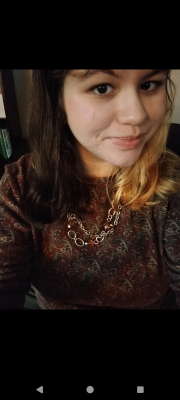
Naima Garcia


Naima Garcia is 18 years old and from Naugatuck, Connecticut. I connect to poetry due to my admiration for its potentially eloquent, song-like structure that provides a space for personal introspection and vivid imagery.
The Dead End at Daybreak


I remember it crystal clear, we all do. It was destined that we would never forget, the everlasting trauma would make our skin crawl, they made sure of that.


The swiftness of the flying poison, the gory casualties that followed, my bloody terror, our anxiety-induced hearts nearly slipping out of our chests, the burden of death and gas misting the atmosphere.


I’ll never forget the visions of the piles of rotting, lifeless corpses increasing by every second, the velvet-splattered outdoor ground, the thousands of Canadians who’s souls had been ripped out at the hands of chlorine gas, the eruption of stinging slipping through my lungs. I tear up and vomit at any topic relative in the slightest to such a memory
Exploring the Depths: UConn ECE Marine Science Symposium Showcases Student Research

By Jessica Dunn

May 22 & 28, 2025


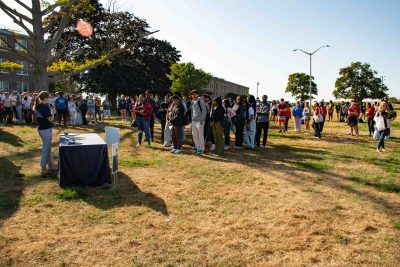
The 2025 UConn Early College Experience Marine Science Symposium made waves this spring at the UConn Avery Point Campus. With growing interest and over 175 student participants, the event expanded to two dates—May 22 and May 28—to accommodate the impressive turnout of UConn ECE student researchers and marine science enthusiasts from high schools across Connecticut.


Hosted on the scenic shores of Long Island Sound, the symposium provided an inspiring platform for high school students enrolled in UConn’s ECE Marine Science courses (MARN1001E: The Sea Around Us and MARN1003E: Introduction to Oceanography with Lab) to showcase the results of their year long research projects. Six schools participated in this year’s event: University High School of Science and Engineering, Marine Science Magnet High School, Waterford High School, Ledyard High School, The Morgan School, and The Sound School.
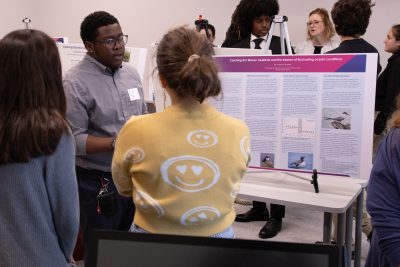
 

Students presented their work through a combination of oral presentations and detailed scientific posters. Research topics ranged from micro plastic pollution and marine biodiversity to the impacts of climate change on coastal ecosystems. The diversity of subjects reflected not only the rigor of the student projects but also the enthusiasm and curiosity these young scientists bring to the field of marine science. By splitting the schools between two dates, the symposium offered a more focused and engaging experience, allowing for deeper discussions, peer to-peer feedback, and meaningful interactions with UConn faculty and marine science professionals. This format helped bridge classroom learning with the real-world application of scientific research. Events like the Marine Science Symposium exemplify the power of experiential education. Students walked away with more than just academic credit—they gained confidence, presentation skills, and a genuine sense of belonging in the scientific community. Their work was not only ambitious and well researched but also impressively presented, showcasing a high level of professionalism and dedication.