Author: Carissa Rutkauskas

Defending Champions Retain Crown at CT Science Olympiad Championship

By Janet Belval, CT State Director, CT Science Olympiad, UConn ECE Instructor at South Windsor High School

UConn Early College Experience was proud to host the 2026 Connecticut State Science Olym­piad Competition. This premier annual event brought together some of the brightest young minds from across the state to showcase their scientific skills, problem-solving abilities, and teamwork. The day was filled with immense excitement, collaboration, and intense competi­tion as these budding scientists left no stone unturned in their quest for victory.


Science Olympiad is a highly regarded competition that challenges students across a wide ar­ray of scientific disciplines, including biology, chemistry, physics, engineering, and more. With an impressive lineup of more than 23 distinct events, the participants were required to exhibit rigorous content knowledge, innovation, and analytical thinking. Over 50 dedicated Science Olympiad teams from around the state prepared for months leading up to the event, showcas­ing a remarkable commitment to excellence.


Tournament Champions & Highlights


The battle for the state title showed incredible depth this season, culminating in a spectacular repeat victory.


Division C (High School): South Windsor High School fiercely defended their title to emerge once again as the Division C State Winners. They will advance to proudly represent Connecti­cut at the National Tournament.


Igniting Curiosity and Inspiring the Future


Participating in Science Olympiad is far more than just a bid for med­als. It is a profound opportunity for young minds to explore their passions and ignite a lifelong curiosity about the world around them. Teams are pushed to their limits in structural building and engineering events, and rigorous written examinations and hands-on experimental design.


Across the campus, the energy of dis­covery was undeniable. Visitors could witness everything from helicopters being flown to a high-stakes Foren­sic Crime Lab being run inside the Chemistry Building.


These are the exact hands-on, im­mersive experiences that create lasting memories for Connecticut students, actively inspiring them to step up and join the next generation of world-changing scientists. The overwhelming success of this year’s Connecticut Science Olympiad com­petition reflects the critical impor­tance of cultivating scientific curiosity in our schools. This massive under­taking would simply not be possible without the foundational support of dedicated coaches, passionate parent and community volunteers, and the exceptional staff of the UConn ECE program.


Final Standings & Special Recognitions

C DIVISION

Gold – South Windsor High School

Silver – Avon High School

Bronze – Staples High School

4th place – Wilton High School

Best New Team – West Haven High School


2026 UConn Early College Experience Marine Science Symposium


By Claudia Koerting, Academic Assistant, Biology, Program Coordinator, Marine Sciences, UConn ECE Marine Science Faculty Coordinator


Now in its 12th year, the 2026 UConn Early College Experience Marine Science Symposium took place on May 29th at UConn’s coastal Avery Point campus. The symposium brought together 56 students from four high schools—University High School of Science and Engineering, Waterford High School, Ledyard High School, and The Sound School—to present their yearlong research projects.


Students enrolled in UConn’s Marine Science courses (MARN1001E: The Sea Around Us and MARN1003E: Introduction to Oceanography with Lab) shared their work through oral presentations and detailed scientific posters, offering an opportunity to practice communicating science to a broad audience of peers, guests, UConn faculty, and graduate students.


MARN 1001E is a marine science course for non-science majors that focuses on human interaction with the marine environment. Over the course of the year, students conducted an in-depth exploration of scientific literature across a range of topics. Their projects examined issues such as climate change impacts on marine species, microplastic pollution, shifting ocean ecosystems, marine conservation and policy, and emerging scientific and medical applications inspired by ocean research. MARN 1003E students presented hands-on research that included ocean acidification resilience, alternatives for fish bait, and even an app developed to identify fish in Long Island Sound.


The wide range of topics reflected both the rigor of the coursework and the curiosity of these emerging scientists. By connecting classroom learning with real-world research, the symposium highlighted the value of experiential education. Students left the event with strengthened presentation skills, increased confidence, and a deeper sense of belonging in the scientific community, demonstrating both professionalism and dedication in their work.


Rock Solid Learning: Earth Science Students Explore UConn


By Maggie McGillicuddy UConn ECE Instructor, ERTH 1051: Earth’s Dynamic Planet, Torrington High School & Robert M. Thorson, Professor, Department of Earth Sciences, UConn ECE Earth Sciences Faculty Coordinator


This spring, an eager group of UCo­nn ECE students from Torrington High School attended a field trip to UConn Storrs Campus to enrich their course, ERTH 1051: Earth’s Dynamic Planet. The group was led by their teacher Maggie McGillicuddy, with help by Rick Dubois, UConn ECE certified physics instructor at Tor­rington High School. His insight was valuable as geophysics is an important part of the Earth Sciences.


The trip began in front of the historic Beach Hall, the headquarters for the Department of Earth Sciences. There, Carissa Rutkauskas, of the UConn ECE program staff, welcomed the stu­dents and informed them of upcom­ing events of the day. At that point, Professor Robert M. Thorson, Earth Science’s UConn ECE Faculty Coor­dinator, called the students’ attention to the sweeping view of Horse Barn Hill as a glacial landform, the disin­tegrating concrete as a consequence of sidewalk salt chemistry, and the trash bins being filled with single-use plastic containers as an example of our dependence on earth materials, in this case petroleum. All these things – landforms, architecture, manu­factured materials – fall within the purview of the Earth Sciences.


Heading inside, we were greeted by the Department Head Professor Tracy Frank, who encouraged the students to think about careers in the field. We also had a chance to meet several fac­ulty members, tour the research and teaching labs, see the ancient iron safe where cash tuition was likely kept, and visit Professor Thorson’s book- and rock-cluttered office.


One highlight of the trip was a guided tour of the Stone Pavilion, a tiny building built in 1937 that mimics the shape of a quartz crystal. The exterior walls and arched openings of this geo­heritage site are built with stones from all 169 towns in Connecticut, includ­ing one from the student’s hometown of Torrington. Inside the pavilion is an exhibit gallery of beautiful speci­men stones, one from each state in the nation.


The students then toured campus, nearly all of them for the first time. Their favorite spot was the Student Recreation Center, which has the tallest climbing wall in New England! After spending time in the UCo­nn Bookstore, everyone ate lunch in the Student Union food court. The final highlight was a visit to the world-famous UConn Dairy Bar for some ice cream.


All in all, it was a great day. The students rated it “11 out of 10!” and the instructors hope to make this an annual event. They set an example for other school visits to follow. We hope to see you next year.

Defending Champions Retain Crown at CT Science Olympiad Championship

By Janet Belval, CT State Director, CT Science Olympiad, UConn ECE Instructor at South Windsor High School

UConn Early College Experience was proud to host the 2026 Connecticut State Science Olym­piad Competition. This premier annual event brought together some of the brightest young minds from across the state to showcase their scientific skills, problem-solving abilities, and teamwork. The day was filled with immense excitement, collaboration, and intense competi­tion as these budding scientists left no stone unturned in their quest for victory.


Science Olympiad is a highly regarded competition that challenges students across a wide ar­ray of scientific disciplines, including biology, chemistry, physics, engineering, and more. With an impressive lineup of more than 23 distinct events, the participants were required to exhibit rigorous content knowledge, innovation, and analytical thinking. Over 50 dedicated Science Olympiad teams from around the state prepared for months leading up to the event, showcas­ing a remarkable commitment to excellence.


Tournament Champions & Highlights


The battle for the state title showed incredible depth this season, culminating in a spectacular repeat victory.


Division C (High School): South Windsor High School fiercely defended their title to emerge once again as the Division C State Winners. They will advance to proudly represent Connecti­cut at the National Tournament.


Igniting Curiosity and Inspiring the Future


Participating in Science Olympiad is far more than just a bid for med­als. It is a profound opportunity for young minds to explore their passions and ignite a lifelong curiosity about the world around them. Teams are pushed to their limits in structural building and engineering events, and rigorous written examinations and hands-on experimental design.


Across the campus, the energy of dis­covery was undeniable. Visitors could witness everything from helicopters being flown to a high-stakes Foren­sic Crime Lab being run inside the Chemistry Building.


These are the exact hands-on, im­mersive experiences that create lasting memories for Connecticut students, actively inspiring them to step up and join the next generation of world-changing scientists. The overwhelming success of this year’s Connecticut Science Olympiad com­petition reflects the critical impor­tance of cultivating scientific curiosity in our schools. This massive under­taking would simply not be possible without the foundational support of dedicated coaches, passionate parent and community volunteers, and the exceptional staff of the UConn ECE program.


Final Standings & Special Recognitions

C DIVISION

Gold – South Windsor High School

Silver – Avon High School

Bronze – Staples High School

4th place – Wilton High School

Best New Team – West Haven High School


News To Know


James Hillhouse High School Students Celebrate the Roaring Twenties  



Thomas C. Foster writes, “Generally, eating with another is a way of saying, “I’m with you, I like you, we form a community together.”    


On May 1, Mr. Kevin Barbero’s ENGL 1007 students put on a “Roaring Twenties” gala at Bregamo’s Community Theater in New Haven, inspired by F. Scott Fitzgerald’s The Great Gatsby and Tender is the Night. Completely planned by students, the night included French salon-style intellectual conversations, eulogies for Jay Gatsby and Dick Diver, and sumptuous food. The project concluded with students writing an essay about why dining together and geography matter symbolically across literature.


A Student Perspective: HRTS 2200—Introduction to Genocide Studies 

Enrolling in HRTS 2200: Introduction to Genocide Studies through the UConn Early College Experience program introduced me to major global issues and taught me the importance of protecting human rights on the global level. The course challenged me to think critically about the historical, political, and social aspects behind genocide, its warning signs, and how we can prevent it. For my final project of the course, I created a website to raise awareness about the humanitarian crisis in South Sudan, using sources from the Bosnian War, case of Darfur, and Indigenous Genocide in Guatemala. 


 I am incredibly grateful to UConn ECE for an experience.   


The website explores the history of the conflict in South Sudan, debates its classification as a genocide, raises awareness of the ongoing humanitarian crisis, and provides visitors with information on how they can help within their own communities. I included links to donation platforms hosted by humanitarian organizations like Save the Children and the International Rescue Committee, which support relief efforts. https:// tavaresroanderson.wixsite.com/hopefor-south-sudan 

– Tavares Anderson, Crosby High School 


Civil Engineering Faculty Coordinator Sarira Motaref   

Professor-in-Residence and UConn ECE Civil Engineering Faculty Coordinator Sarira Motaref is featured in the latest issue of UConn Magazine for her innovative approach to teaching CE 2110: Applied Mechanics I. The article highlights her commitment to student success, her nationally recognized work in inclusive engineering education, and the ways she helps students connect complex engineering concepts to the world around them. From supporting neurodiverse learners to creating engaging, real-world learning experiences, Motaref exemplifies the dedication and excellence of UConn ECE faculty. Read the full article to learn more about her teaching philosophy, research, and impact on students at UConn and across Connecticut. https://magazine.uconn. edu/2026/06/11/ce-2110-applied-mechanics-i/   


Expanding Opportunities with New Courses for 2026–2027  

UConn Early College Experience is expanding its academic portfolio for the 2026–2027 school year with a diverse lineup of new courses that provide students with even more opportunities to explore their interests while earning college credit. New offerings include Elementary Arabic I and II, introducing students to Modern Standard Arabic and global language study; Fundamentals of General Chemistry I and II, expanding access to a wider array of Chemistry coursework and strengthening preparation for STEM and health-related majors; Introduction to Theater Arts and Playwriting, which foster creativity and communication through the performing arts; Computer-Aided Design and Manufacturing, providing hands-on experience with industry-standard CAD software and manufacturing principles; and two new pharmacy courses, Fundamentals of Pharmacology and Discovering the Leader Within that introduce students to healthcare careers while building essential leadership skills. Together, these additions reflect UConn ECE’s commitment to offering rigorous, relevant coursework that prepares students for success in college and beyond. 


• ARAB 1001: Elementary Arabic I  • ARAB 1002: Elementary Arabic II  • CHEM 1124Q: Fundamentals of General Chemistry I    • CHEM 1125Q: Fundamentals of General Chemistry II    • DRAM 1101: Introduction to Theater Arts  • DRAM 3141: Playwriting  • ME 2140: Computer-Aided Design and Manufacturing (previously ME 3295)  • PHAR 1002: Fundamentals of Pharmacology  • PHRX 3057: Discovering the Leader Within  


Deep Impact Study 

The UConn Early College Experience Deep Impact Study is conducted every five years to better understand the long-term impact of UConn ECE on students, instructors, schools, and college readiness. The information gathered from instructors, site representatives, and principals’ helps guide program improvement, inform future initiatives, and ensure that UConn ECE continues to meet the needs of participating schools and students across the state. The survey will open this fall, and we strongly encourage all invited stakeholders to participate. Your feedback is essential in helping us evaluate the program’s effectiveness and shape its future development. 


Congratulations to the following UConn ECE Faculty Coordinators on their promotions: 

 Vishal Baloria (Accounting) Tenure as Associate Professor


Michele Back (Curriculum & Instruction) Promotion to Professor


Jorge Paricio Garcia (School of Mechanical, Aerospace, & Manufacturing Engineering) Promotion to Professor In-Residence


Brian Chapman (Human Development and Family Sciences) Promotion to Associate Professor In-Residence 


Welcome New Faculty Coordinators 

Arabic

Brady Ryan, Ph.D. 



European History 

Brendan Kane, Ph.D. 


Allied Health

Lauren Corso, Ph.D. 



UConn ECE Honors 2026 Graduates 

 By Todd Blodgett  


For the third year, UConn Early College Experience (ECE) proudly celebrates the academic accomplishments of high school seniors through the UConn ECE Honor Cords program. This spring, 106 partner high schools distributed UConn Honor Cords to their eligible seniors.


Students received their cords during college credit ceremonies, senior class nights, and other school events. These cords, in UConn’s signature blue and white, symbolize the achievement of successfully completing a rigorous UConn course while still in high school. Graduating seniors who have taken at least one UConn course through ECE and are in good standing with the program are invited to wear the cords at graduation.
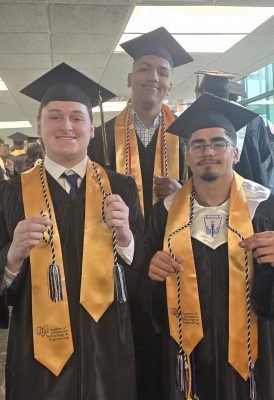
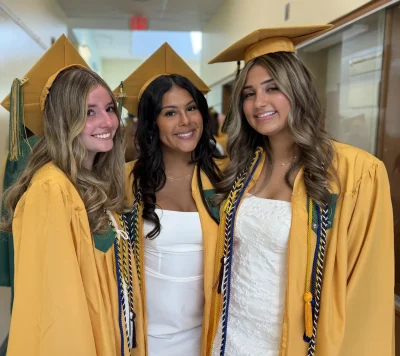


The colors themselves are steeped in university history: “National Flag Blue” (Pantone 289), a tradition dating back to the 1950s under President Albert N. Jorgensen, with further refinement by Athletics Director Tim Tolokan, who helped standardize uniforms and institutional branding. Congratulations to the high school Class of 2026—who wore their UConn ECE Honor Cords with pride!


UConn ECE Professional LinkedIn Page 


In addition to our LinkedIn Alumni Group, UConn Early College Experience is excited to launch a new Professional LinkedIn Page dedicated to advancing the conversation around concurrent enrollment. This page will serve as a hub for educators, administrators, site representatives, and higher education partners interested in best practices, research, program outcomes, professional development, and the accomplishments of our instructors, schools, and districts. Followers can expect insights into the field, recognition of outstanding achievements across our network, and updates that highlight the impact of concurrent enrollment throughout Connecticut and beyond. As part of this transition, our Professional Development Blog will move to LinkedIn, where ECE Instructor workshop recaps, training highlights, and other professional learning content will be shared directly through posts and articles. We encourage all school professionals involved with UConn ECE to follow the page and join us as we share innovations, celebrate successes, and strengthen our professional learning community. 


UConn ECE Well Represented at NEACEP 2026 Conference 

 The University of Connecticut’s Early College Experience (ECE) program was well represented at the 2026 New England Alliance of Concurrent Enrollment Partnerships (NEACEP) Conference, held May 28 at Manchester Community College in Manchester, New Hampshire. The conference theme, “The Dual Credit Challenge: Expanding Access While Upholding Standards,” brought together educators, administrators, and policymakers to explore how dual and concurrent enrollment programs can increase student opportunity while maintaining academic quality and rigor. 


The conference featured a keynote address by Anna O’Connor, Senior Director at Jobs for the Future (JFF). Drawing on her experience across K–12 education, higher education, and government, O’Connor discussed innovative dual enrollment models, equitable access to college and career pathways, and the value of cross-sector partnerships in supporting student success. 


UConn ECE educators and partners contributed several presentations showcasing innovative teaching practices, pathway development, and program leadership. Jeri Brima of Staples High School presented Students are the Experts Now: Project-based Learning in American Popular Music, highlighting student-centered instructional approaches that foster engagement and deeper learning. 
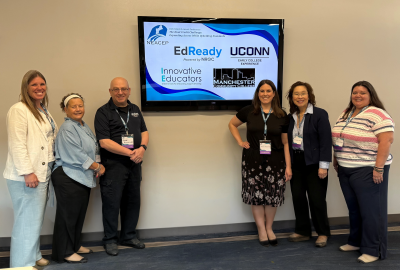


A collaborative session, Identity, Belonging, and Academic Rigor: The Role of Ethnic Studies in Expanding Access to Dual Enrollment, was presented by Teresa Obedzinski of Naugatuck High School, Michelle Henry of Simsbury High School, and Dr. Jason Chang of the University of Connecticut. Their presentation explored how ethnic studies courses can strengthen student belonging while maintaining high academic expectations and expanding participation in dual enrollment. 


Career pathway development was also prominently featured. Frank F. Marcucio III of Waterbury Career Academy presented Building a Rigorous Dual Credit EMT Pathway: Expanding Access While Upholding Standards, sharing strategies for creating healthcare career opportunities aligned with college-level expectations. Linda Richard, RN, of Waterbury Career Academy presented Career Academies 101: A Blueprint for Success, offering insights into designing and sustaining career academy models that prepare students for college and workforce success. 


UConn ECE staff members Bobbi-Jo Wathen, PhD, and Carissa Rutkauskas presented Expanding Access While Maintaining Standards, highlighting UConn ECE as a national model for balancing growth with academic integrity. Their session examined advising structures, academic pathways, faculty oversight, and quality assurance practices that support one of the nation’s longest-running concurrent enrollment programs.


The strong presence of UConn ECE presenters reflected the program’s commitment to innovation, collaboration, and excellence in concurrent enrollment, helping advance conversations about expanding educational opportunity while preserving rigorous, transferable college-level learning experiences. 

Defending Champions Retain Crown at CT Science Olympiad Championship

By Janet Belval, CT State Director, CT Science Olympiad, UConn ECE Instructor at South Windsor High School

UConn Early College Experience was proud to host the 2026 Connecticut State Science Olym­piad Competition. This premier annual event brought together some of the brightest young minds from across the state to showcase their scientific skills, problem-solving abilities, and teamwork. The day was filled with immense excitement, collaboration, and intense competi­tion as these budding scientists left no stone unturned in their quest for victory.


Science Olympiad is a highly regarded competition that challenges students across a wide ar­ray of scientific disciplines, including biology, chemistry, physics, engineering, and more. With an impressive lineup of more than 23 distinct events, the participants were required to exhibit rigorous content knowledge, innovation, and analytical thinking. Over 50 dedicated Science Olympiad teams from around the state prepared for months leading up to the event, showcas­ing a remarkable commitment to excellence.


Tournament Champions & Highlights


The battle for the state title showed incredible depth this season, culminating in a spectacular repeat victory.


Division C (High School): South Windsor High School fiercely defended their title to emerge once again as the Division C State Winners. They will advance to proudly represent Connecti­cut at the National Tournament.


Igniting Curiosity and Inspiring the Future


Participating in Science Olympiad is far more than just a bid for med­als. It is a profound opportunity for young minds to explore their passions and ignite a lifelong curiosity about the world around them. Teams are pushed to their limits in structural building and engineering events, and rigorous written examinations and hands-on experimental design.


Across the campus, the energy of dis­covery was undeniable. Visitors could witness everything from helicopters being flown to a high-stakes Foren­sic Crime Lab being run inside the Chemistry Building.


These are the exact hands-on, im­mersive experiences that create lasting memories for Connecticut students, actively inspiring them to step up and join the next generation of world-changing scientists. The overwhelming success of this year’s Connecticut Science Olympiad com­petition reflects the critical impor­tance of cultivating scientific curiosity in our schools. This massive under­taking would simply not be possible without the foundational support of dedicated coaches, passionate parent and community volunteers, and the exceptional staff of the UConn ECE program.


Final Standings & Special Recognitions

C DIVISION

Gold – South Windsor High School

Silver – Avon High School

Bronze – Staples High School

4th place – Wilton High School

Best New Team – West Haven High School


The 2026 UConn Italian Multimedia Contest

By Dr. Tina Chiappetta-Miller , Associate Professor In-Residence, Literatures, Cultures, and Languages and UConn ECE Italian Literature and Cultural Studies Faculty Coordinator


Now, in its third year, the UConn ECE Italian Multimedia Contest continues to offer students of Italian an original, engaging, and creative way to apply their language skills. This year’s theme, “Il linguaggio del…vero io” (“The language of… my true self ”) struck a special chord with the high school participants. The theme inspired more than 35 submissions that explored students’ intimate feelings and lived experiences.


Students responded in a wide range of creative formats, including poems, drawings, photo col­lages, and even an original song, which earned an honorable mention. This year’s winners expressed deeply personal images of their complex identi­ties, highlighting the intersection of cultures that shape who they are.


The contest jury, composed of Professor Federica Anichi­ni’s 10th grade class at the Istituto Agrario in Florence, Italy, were very impressed with this year’s submissions. Students Ettore, Viola, and Niccolò stepped up to record an enthusiastic video announcing the winners.


The best part about the “Il linguaggio di…” contest is that it showcases the strength and vitality of high school Italian programs across Connecticut while reinforcing UConn ECE’s connection and commitment to language learning and creative expression.


1st place: Virginia Akide Ndunge of Holy Cross High School with her essay, “Troppo, Non Abbastanza” (“Too much, not enough”) and her original collage “Sono Abbas­tanza” (“I am enough”).


2nd place: Jose Taveras of Bristol Central High School with his poem and photo collage, “Il mio cuore” (“My heart”).


3rd place: Isabella Cacnahuaray of Holy Cross High School with her poem “Mio Mondo Pieno di Somiglianza” (“My world full of similarities”) and drawing, “La Bellezza della Cultura” (“The beauty of culture”)


Honorable Mention: Emersyn Miller of Staples High School for her original song, “Scopri chi sono” (“Discover who I am”).


UConn ECE Wallace Stevens Poetry Contest


By Sean Frederick Forbes, PhD and Luisana Duarte Armendáriz, Director and Graduate Assistant Director, Creative Writing Program


The theme of this year’s UConn ECE Summer Magazine “Beyond the Credits” is most fit- ting since it highlights the many opportunities available to student creative writers outside of the classroom. When I was a first-year college student in 1998 at Queens College, The City University of New York, I learned about the various creative writing contests, with generous cash prizes, and while I was terrified of submit- ting my poetry and prose for consideration, this process taught me the importance of professional development. While one may feel deeply vulner- able about submitting creative writing to con- tests, there’s a thrill that comes with organizing a five-page packet of poetry, sending it off, and the long, nervous waiting period for the winners to be announced. I often tell my undergraduate students to strongly consider submitting their writing to various contests that they are eligible for, and as my maternal grandmother used to tell me, “It’s like playing the lottery; there’s always a chance that you may actually win.”


This year the UConn ECE Wallace Stevens poetry contest received fifty-four poetry packets. My fellow judges, Luisana Duarte Armendáriz and Shelby Kreiger—both PhD candidates in English at UConn and are creative writers—and I selected three poetry packets by Iris Hida, Logan Roen, and Minh Ho as the first, second, and third prize winners respectively. On a Thursday afternoon in mid-February, Luisana, Shelby, and I held a Zoom meeting to discuss and select the winners, and after an hour of careful deliberating, the three of us were moved by the subjects and topics presented in all the submissions. There were three poetry packets that stood out to us the most due to the original language, tone, and voice expressed in the poems.


Iris Hida’s poem “The Freedom I Held Does Not Compare to the Spring: A Golden Shovel” employs an original poetic form that was invented in 2010 by Terrance Hayes as an homage Gwendolyn Brooks’s famous 1959 poem “We Real Cool.” The subtitle of Hida’s poem is taken from a quote by the Albanian poet Genc Leka who was executed in 1977 and serves as the last word in each line of the poem. This poetic form requires skill, concentration, and to make new meaning of the Leka’s quote. Hida uses the couplet form to allow the narrative of the poem to breathe, and the white space in between each stanza allows for the delivery of rich imagery such as “Silent, / pursed lips that curl when you / taste the citrus.”


Logan Roen’s poem “chicken noodle” relies heavily on monostich, a term derived from the ancient Greek, and a challenging yet rewarding poetic form in that the simple and direct language offers the reader intense brevity since there isn’t much room for elaboration in each line, thus the impact of the poem holds great emotional or philosophical weight. Roen uses lower case letters throughout to break from traditional grammar to create a more conversational and colloquial tone. The reader must consider how the title informs and relates to the narrative expressed in lines such as “and yet i’ve been told this is just soup. An occasionally aesthetic assortment / of the obscure and the obscene. i suppose time is the broth.”


Luisana notes that Minh Ho’s poem “organic mosaic” is, quintessentially, a memento mori poem. The line “and it is fleeting, for we are organic” encompasses the realist, yet appreciative tone that Ho manages to capture in a recounting of the decomposition process that humans go through in their daily lives. Addressing “the reader” directly, the first-person narrator offers a list of organic material hu- mans shed and gives a double and profound meaning to the line “the world we inhabit is human-made.” While the lines in this poem may seem morose at times, they also speak of a delicate balance in nature and remind us that we are dust and we all must go “back to the source.”


The Freedom I Held Does Not Compare to the Spring: A Golden Shovel (First Place)

By Iris Hida


“How long do you moan and be silent, you miserable heart… This spring didn’t even bloom for you” -Genc Leka, January 1971

My father bleeds history, tells me how
verses burgundy paper with long


ballads for change—how do
I feel their past agony? Where you


hold hands with grief, moan
at your own words and


suppress your spirit. Be
still at the round table. Silent,


pursed lips that curl when you
taste the citrus. That miserable


burn at the lick of the sickle’s heart


IRIS

Iris Hida is a senior at Rockville High School. This past summer she was at the Kelly Writers House Summer Workshop for Young Writers at the University of Pennsylvania and a mentee in the 2024 Adroit Journal Sum- mer Mentorship program. She will be attending Harvard University in the fall

chicken noodle (Second Place)

By Logan Roen


and she splits open, right down the middle.


i feel it, too, the meat of my body turning into unholy epithelial


layers flaking out, tasting the surplus of tainted oxygen.


what i feel, you feel, so you feel this, too. feel it. explode.


her disintegration, is it dramatic to you? now that nothing is how it belongs?


and yet i’ve been told this is just soup. an occasionally aesthetic assortment


of the obscure and the obscene. i suppose time is the broth?


i marinade with you, and you marinade with me,


and i love you, and you hate me,


and then comes the spoon.


LOGAN

Logan Roen is a senior at New Canaan High School, where he is Co-President of Spectator Literary Magazine. He has wanted to be a writer since he was 7, drafting his first piece of fiction in second grade. He plans to attend film school in the fall to study screenwriting.


Organic Mosaic (Third Place)

By Mihn Ho


i regret to inform the reader that they are shedding copious amounts of organic material.


dust? dead pieces of skin, formerly attached to you.


hair? your shower drain is graced by what once held to your scalp.


nails? hundreds, nay, thousands of clippings have (hopefully) made it to your trash.


the world we inhabit is human-made,


full of bright glass screens and plastic toys.


but even the greatest inventors are always leaving traces of who they are.


a fingerprint here, a footfall there.


the quietest person you know leaves a fleeting part of themself everywhere.


and it is fleeting, for we are organic.


forged metal may not decompose, and lord knows our plastic won’t,


but our traces will, the dead skin and hair and nails


our organic material will break down


day by day, hour by hour, minute by minute…


our bodies fall apart, and the nutrients used to make us, they return to the earth


we may try to halt the process, but it happens nonetheless.


organic material relinquishes its bond with us beings,


and goes back to the source.


MINH

Minh Ho is a high school senior from Stam-ford, Connecticut. In the fall, they will major in political science. They are passionate about education and the way words can connect people from all walks of life. Their free time is spent drawing, listening to mu- sic, and finding new ways to describe the clouds. Writing has always been a meaningful part of their life, and they enjoy discussing different works with friends.


CT History Day: Young Historians Seize McHugh Hall


Introduction by Christopher Todd

Participant data by Cyndee McManaman, CT History Day Regional Coordinator


The University of Connecticut and the Office of Early College Programs are proud to support Connecticut History Day (CHD), an enriching program that empowers students to explore the past through rigorous research, thoughtful analysis, and creative expression. This year’s theme, “Revolution, Reaction, Reform in History,” invited students to examine the dynamic forces that have shaped societies across time and place. By investigating moments of transformative change, the responses they inspired, and the reforms that followed, students gain a deeper understanding of how history informs the pres­ent. Through this partnership, UConn and Connecticut History Day foster the curiosity, critical thinking, and civic engagement that prepare the next generation of informed leaders to make meaningful contributions to their communities and beyond.


On Saturday, March 7th, UConn Storrs hosted 30 schools comprised of 29 educators and 514 students for the Mansfield Regional Connecticut History Day Contest. In total, 4,805 students participated in Con­necticut History Day contests this year, with the State Contest held at Central Connecticut State University (CCSU) on Saturday, May 2nd.


56 Connecticut students traveled to the University of Maryland June 14–18, 2026, for the National History Day Contest, joining more than 2900 students from around the world. Fifteen Connecticut entries received awards or recognition at the National Contest; eight of these entries hailed from the Mansfield Region.


Cyndee McManaman, Mansfield Regional Coordinator: “I was happy to have new schools participate in History Day this year. The standards and inquiry-based skills students acquire and hone while completing a His­tory Day project speaks to the rigor embedded in the program. Watching students grow and improve throughout the contest season is powerful. Students aren’t just learning about the history of their chosen topic, but of our country’s and world’s history through the lens of the annual theme.”


Teacher quotes

History Day is a fantastic program that challenges students to develop a long-term project using a wide range of resources. As such, it requires persistence and time management, analytical skills when reading high-level text and historical documents and then adapting those resources into a high-quality project.

We encourage students to participate in History Day to engage in rigorous research and presentation of information. Students learn valuable skills all along the journey – academic research related, social, and personal.


Student quotes

I loved seeing other projects and gaining a better insight about other parts of history.

I truly enjoyed doing research and creating a nuanced understanding of history.

Eclipses


By Alina Britchi


Alina Britchi is a UConn ECE Instructor certified to teach PHYS1201Q: General Physics I, PHYS1202Q: General Physics II, PHYS1401Q: General Physics with Calculus I, and PHYS1402Q: General Physics with Calculus II.


Many call a total solar eclipse a “once-in-a-lifetime” event but most people who see one often want more. I’m one of them. I experienced my first totality in 1999 in Romania. A special banknote was printed to celebrate the event. I still remember the awe like it was yesterday: sudden darkness, wind, birds flying all over, crowd growing louder, and then… the Sun’s corona! What a beauty! Two unforgettable minutes of totality ended in a blink of an eye.


Fast forward a decade and a half later, I live in the U.S. Year 2016 brings chatter of not one, but two Great American Eclipses heading our way: 2017 and 2024. And now the knowledge that solar eclipses are not very rare, but totality is happening over populated areas. In 2017 I would have only seen a partial solar eclipse, but now a new idea: I could travel to see totality. And that’s how I became an eclipse chaser. Like sunsets, no two eclipses are identical. I’ve seen three and plan to see more.


My second eclipse, the 2017 one, became a shared obsession. My husband had never seen one. As we were in Utah for an unrelated event, we drove four hours to Idaho to experience the totality. This time, in an open field, made the Moon shadow traveling in front of our eyes very obvious. With few people around, the celestial show was humbling. We learned to photograph the partiality with simple gear; eclipse glasses over the lens of a simple Canon camera. And thus, our first solar eclipse collage was born.


And now we are set for the 2024 American eclipse and booked a hotel a year ahead. I wore eclipse-themed shirts for months and organized a school photo contest. We chose Niagara Falls but clouds limited us to a mere 10 seconds of totality. We hoped for 4 minutes, but now we focused on different things: the light shifting from day to night and back to day over the falls was worth it.


Upcoming opportunities include 2025 (Spain, Greenland, Iceland), 2026 (Spain, Middle East), and 2028 and 2030 in Australia.


If you’ve never seen a total solar eclipse, consider traveling to one, you will never regret seeing the Sun’s corona and the magic of totality.