By Briana Ried-Maloney, UConn PCS Graduate Assistant, HESA Master’s Student
UConn Pre-College Summer 2026 Applications Now Open with Expanded Opportunities
UConn Pre-College Summer (PCS) is a summer academic program for high school students that provides an early introduction to college-level learning and life. Through immersive coursework and structured programming, students explore academic interests, engage with UConn faculty, and gain firsthand experience navigating college academics and campus life, leaving with greater confidence and a clearer understanding of the transition to college.
Expanding to the Hartford Campus!
Aligned with UConn’s “One UConn” vision, the Pre-College Summer program has expanded its presence in Hartford. The Hartford site will highlight the great academic programs in Hartford by offering courses in: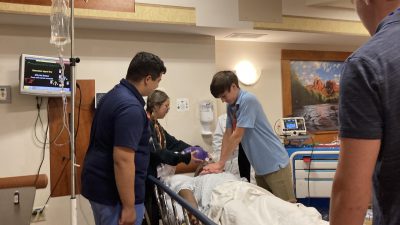
• Social Work
• Public Policy: Public Service for the Greater Good
• Nursing: Early Introduction to the Nursing Program
The Hartford session will not be residential and is best suited for students who desire an immersive experience, but don’t want to be away from home. The program will support local students with CT Transit bus passes to facilitate easier access to campus. In addition, the Hartford program will host a Family Engagement Night to support families. We are partnering with the Hartford Public Library to support workshops designed to promote college & career readiness and whole-student growth through collaborative learning in the community.
New Courses @ Storrs
Our programing at the Storrs campus continues to be a residential, immersive learning experience for students age 14-17 years old. Pre-College Summer 2026 also expands its academic offerings at the Storrs campus to include several new courses that reflect diverse interests and emerging fields. New courses for the summer session include:
- Accounting
- Early Introduction to the Nursing Profession
- CHEM 1194: The Science of Chemistry (1 credit)
- 3D Modeling and Printing: Bringing Ideas to Reality
- Design & Hype: Creative Advertising for the Digital Age
- Equine Science: Health, Management & Rehabilitation
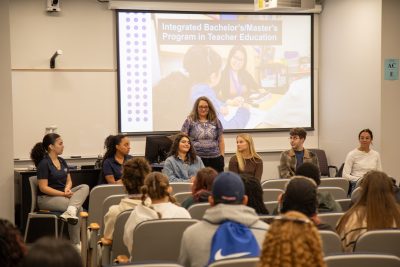
- The Calling to Teach
- Exploring a Career in Sport Management
Updated Workshops
In addition to academics, the program has redeveloped its workshop model to emphasize structured learning experiences to support postsecondary goals and transitions. Students will participate in workshops focused on college and career development, leadership and personal development, and academic skills development, equipping them with tools that extend beyond the classroom. This portion of our program mimics the university’s First Year Seminar course, preparing them for the soft skills needed for success in college.
Scholarships!
Applications for UConn Pre-College Summer 2026 are now open for high school students! Centering accessibility for a broader range of participants, we are offering 2 different scholarships:
LIFETIME TRANSFORMATIVE EDUCATION ACCESS
There are two levels of this scholarship, Blue and Gray, 10 scholarships available at each level. Scholarships are competitive and require an additional essay and recommendation from a school counselor, teacher, or mentor. Students who qualify are encouraged to apply within the application.
Grey Scholarship:
- Discounted tuition rate: $1175 (50% discount)
- Families making less than $100k/annually
Blue Scholarship:
- Discounted tuition rate: $300 (87% discount)
- Families making less than $80k/annually
CLIMATE SCIENCE SCHOLARSHIP
This scholarship offers full tuition coverage for 5 participants who are taking the Climate Science course. These scholarships are competitive and require that students apply when they submit their application to our program. scholarships, stay updated on any new scholarships on our website, pcs.uconn.edu.
We can’t wait to see your students this summer!
With expanded scholarships, new academic pathways, and increased investment in structured student development and community partnerships, UConn Pre-College Summer 2026 offers high school students meaningful preparation for future academic and career pathways. For more information and to apply, visit the UConn Pre-College Summer website, pcs.uconn.edu!


 #2 Ellington High School – Silver Bullet